Court Emphasizes Procedural Law as a Tool for Justice, Sets Aside Trial Court's Rejection on Technical Grounds
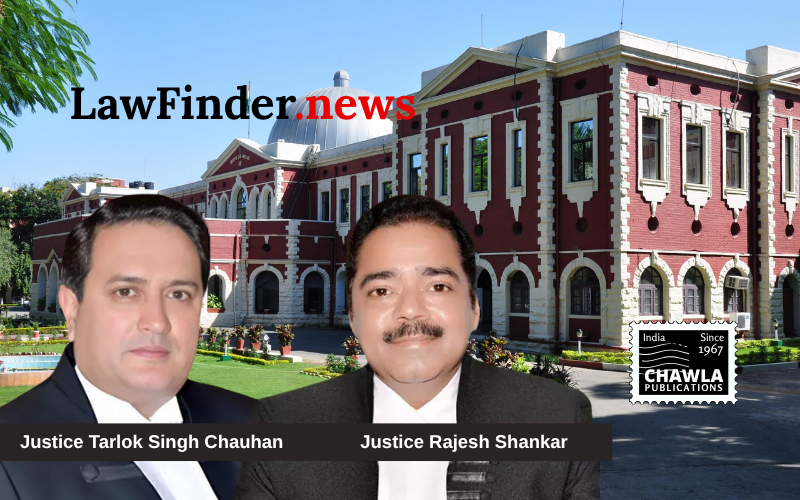
In a significant ruling, the Jharkhand High Court has overturned a lower court's decision, permitting the defendant to submit additional documents at a later stage in an ongoing trademark infringement suit. The Division Bench, comprising Chief Justice Tarlok Singh Chauhan and Justice Rajesh Shankar, emphasized that procedural laws should aid rather than obstruct justice, particularly when the documents are crucial for a fair decision.
The case, initiated in 2017, involves a dispute between Rita Verma, proprietor of 'Chaganlal Madanlal & Sons Jewellers,' and Chetan Adesera, who represents 'Chhaganlal Dayaljee.' The plaintiffs accuse the defendant of trademark infringement and passing off, seeking multiple injunctions and damages.
During trial, the defendant sought to introduce several documents, including trademark applications and newspaper articles, arguing their relevance to the case. However, the trial court dismissed the application, citing procedural delays and previous opportunities given to the defendant to submit documents.
The High Court, in its judgment dated November 20, 2025, criticized the trial court's approach as "hyper-technical." It stressed that procedural rules are designed to facilitate justice and should not prevent the adjudication of substantive rights. The judgment cited precedents from the Supreme Court, underscoring that procedural violations should not outweigh the pursuit of substantial justice.
The High Court allowed the submission of the documents, imposing a cost of Rs. 25,000 on the petitioner, payable to the Jharkhand State Legal Services Authority. The court also directed the trial court to expedite proceedings, setting a deadline for concluding the case by March 31, 2026.
This decision reinforces the judiciary's stance on prioritizing justice over procedural formalities, aligning with the broader legal principle that laws should serve justice, not hinder it.
Bottom Line:
Procedural law is the handmaid of justice and should not obstruct or impede substantial justice, especially when production of documents is necessary for fair adjudication of a case.
Statutory provision(s):- Civil Procedure Code, 1908 Order VIII, Rule 1-A
Rita Verma v. Chetan Adesera, (Jharkhand)(DB) : Law Finder Doc Id # 2817095