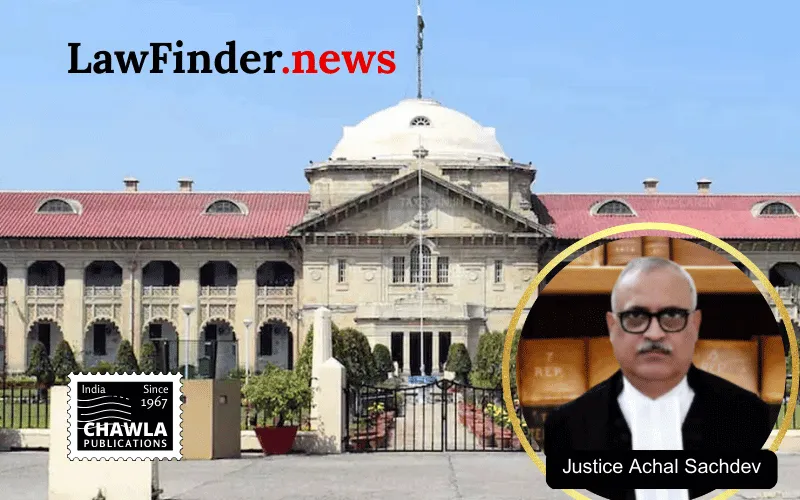
New Delhi, Jan 7 Allahabad High Court judge Yashwant Varma on Wednesday opposed in the Supreme Court the setting up of an inquiry committee by the Lok Sabha Speaker to probe corruption charges against him.
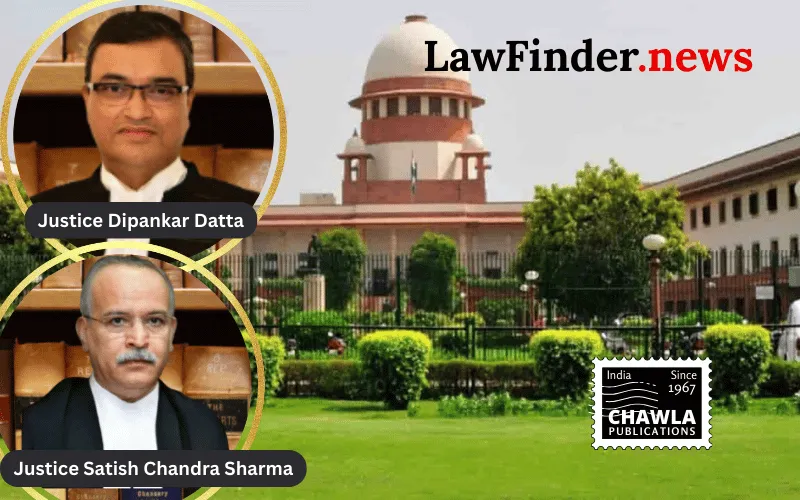
Referring to the provisions of the Judges (Inquiry) Act, 1968, Justice Varma, represented by senior advocate Mukul Rohatgi, told a bench comprising Justices Dipankar Datta and Satish Chandra Sharma that if the impeachment motions are moved simultaneously in the Lok Sabha and the Rajya Sabha on the same day then the inquiry committee has to formed jointly by both the houses.
The senior lawyer said in the present case, the motion stood cancelled in the Rajya Sabha and the Lok Sabha Speaker constituted the inquiry committee which is ‘non-est’ (it is not) in law.
Rohatgi also assailed the decision of the deputy chairperson of the Rajya Sabha to reject the motion which was earlier admitted by the chairperson from the upper house.
The question is whether the Speaker of the Lok Sabha could unilaterally constitute an inquiry committee when removal motions were initiated in both Houses of Parliament on the same day, but admitted only in one House, Rohatgi said.
The senior lawyer questioned the constitution of a three-member committee formed by the Lok Sabha Speaker under Section 3(2) of the Judges (Inquiry) Act, arguing that it violates the mandatory procedure under Article 124(5) of the Constitution.
Rohatgi submitted that for the removal of a judge, Parliament must strictly adhere to the procedure prescribed under the Act, which requires a motion signed by at least 100 members of the Lok Sabha or 50 members of the Rajya Sabha.
Once such a motion is admitted, a committee is to be constituted to conduct an inquiry, akin to a departmental proceeding, followed by debate in the House.
Drawing the attention of the bench, Rohatgi emphasised that impeachment motions against Justice Varma were moved in both Houses of Parliament on the same day that is July 21, 2025.
Referring to the provisions, he said when notices of motion are given in both Houses on the same day, no committee shall be constituted unless the motion is admitted in both Houses.
In such a situation, the Act contemplates the formation of a joint committee by the Speaker of the Lok Sabha and the Chairman of the Rajya Sabha.
“In the present case, one motion was rejected. Therefore, the committee constituted thereafter is non est in law,” Rohatgi said.
The bench, however, questioned whether the rejection of a motion in one House would automatically invalidate proceedings initiated in the other House.
Referring to the affidavit filed by the Lok Sabha, Rohatgi stated that the Deputy Chairman of the Rajya Sabha had rejected the motion on August 11, while the Lok Sabha Speaker constituted the committee on August 12.
The bench said that the Act does not expressly state that if one House rejects a motion, the other House is barred from proceeding.
“Where is the bar under the proviso for the Lok Sabha to appoint a committee if the Rajya Sabha rejects the motion?” Justice Datta asked.
The senior lawyer said once two motions are properly moved on the same day, the law mandates a joint process, and if both are not admitted, the entire exercise must fail.
The hearing is underway
Justice Varma was repatriated from the Delhi High Court to the Allahabad High Court after burnt wads of currency notes were found at his official residence in New Delhi on March 14.
The top court had on December 16 agreed to hear Justice Varma’s plea challenging the constitution of the inquiry committee and issued notices to the Lok Sabha Speaker and the Secretaries-General of both Houses of Parliament.
Earlier, then Chief Justice of India Sanjiv Khanna had initiated an in-house inquiry and constituted a three-member committee comprising Punjab and Haryana High Court Chief Justice Sheel Nagu, Himachal Pradesh High Court Chief Justice G.S. Sandhawalia, and Karnataka High Court Justice Anu Sivaraman.
The committee submitted its report on May 4, finding Justice Varma guilty of misconduct.
After Justice Varma declined to resign, the CJI forwarded the report and the judge’s response to the President and the prime minister, setting the stage for impeachment proceedings.
Subsequently, Lok Sabha Speaker Om Birla admitted a multi-party motion for Justice Varma’s removal on August 12 and constituted a three-member inquiry committee comprising Supreme Court judge Justice Aravind Kumar, Madras High Court Chief Justice Manindra Mohan Shrivastava, and senior advocate B V Acharya.
Justice Varma has sought quashing of the Speaker’s action, the admission of the motion, and all consequential notices issued by the inquiry committee, contending that the entire process is unconstitutional and contrary to the Judges (Inquiry) Act.