Court Orders Authorities to Enforce Statutory Provisions and Ensure Fair Trial in Darshan Srinivas Case
In a landmark judgment, the Karnataka High Court has directed stringent action against media outlets for allegedly engaging in prejudicial pre-trial publicity concerning the high-profile case involving Kannada actor and producer, Mr. Darshan Srinivas. The court emphasized the need for balancing media freedom with the right to a fair trial, a fundamental right under Article 21 of the Indian Constitution.
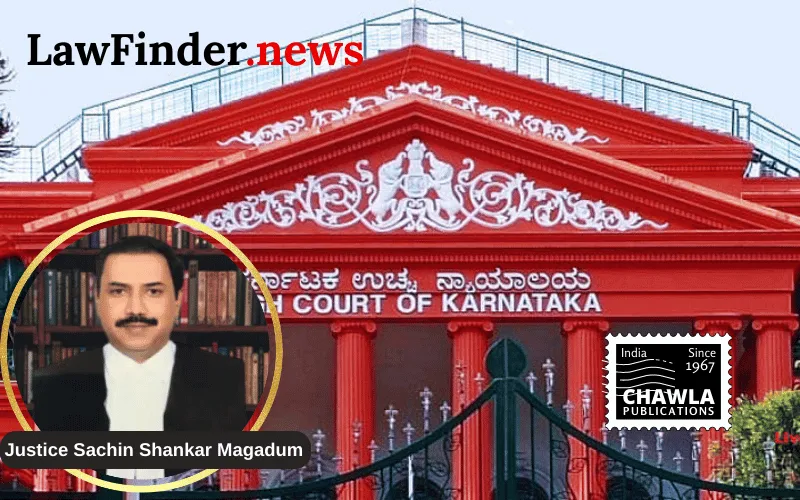
Presiding over the case, Justice Sachin Shankar Magadum addressed a writ petition filed by Mr. Srinivas, who claimed that sustained media coverage had compromised his right to a fair trial. The case pertains to Crime No. 250/2024, registered for serious offenses under Sections 302 and 201 of the IPC.
Despite judicial orders restraining media outlets from publishing confidential materials related to the case, several channels continued to broadcast content, allegedly in violation of statutory provisions and court directives. The petitioner argued that such media conduct amounted to a "trial by media," impairing his legal rights and the integrity of the judicial process.
The court's order highlighted the statutory obligations of media authorities under the Cable Television Networks (Regulation) Act, 1995, and the Information Technology Act, 2000. It directed the Union of India and relevant officials to examine the broadcasts for violations of Rule 6 of the Programme Code and take necessary actions, such as regulating, suspending, or prohibiting the dissemination of prejudicial content.
Justice Magadum underscored the adverse impact of media trials, drawing parallels with global jurisprudence. Citing notable cases such as Sheppard v. Maxwell and Nebraska Press Association v. Stuart, the court reiterated the principle that justice must not only be done but also be perceived to be done, free from media bias.
The court ordered the authorities to act on a complaint filed by Mr. Srinivas in January 2026, demanding accountability for media practices that contravene legal and ethical standards. The judgment also reserved the petitioner's right to initiate contempt proceedings should media violations persist.
This decision marks a significant development in the ongoing discourse on media freedom and judicial fairness, reinforcing the judiciary's commitment to protecting the sanctity of legal proceedings against undue external influence.
Bottom line:-
Media cannot indulge in prejudicial pre-trial publicity or media-driven adjudication that interferes with the administration of justice and undermines the right to a fair trial. Authorities are obligated to act upon complaints regarding such violations under relevant statutory provisions.
Statutory provision(s): Article 21 of the Constitution of India, Cable Television Networks (Regulation) Act, 1995 Sections 19, 20, Cable Television Networks Rules, 1994 Rule 6, Information Technology Act, 2000 Section 79(3)(b), Contempt of Courts Act, 1971 Section 2(c).
Mr. Darshan Srinivas v. Union of India, (Karnataka) : Law Finder Doc id # 2899723