Court Sets Aside Speaker's Refusal, Emphasizes Need for Permission Before Filing Charge Sheet Against Legislators
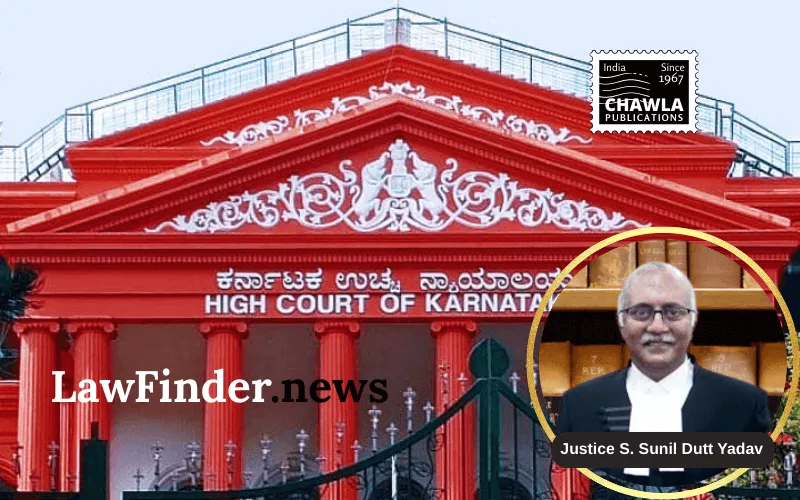
In a significant legal development, the Karnataka High Court, presided over by Justice S Sunil Dutt Yadav, has mandated the Hon'ble Speaker of the Karnataka Legislative Assembly to reconsider a request for prosecution sanction in a corruption case involving Members of the Legislative Assembly (MLAs). The court set aside the Speaker's previous refusal to grant sanction, highlighting the necessity for obtaining permission before proceeding with charges against legislators under the Prevention of Corruption Act, 1988.
The judgment came in response to a writ petition filed by Abraham T.J., the complainant in a private complaint case, challenging the communication dated April 25, 2022, which stated that the Speaker was not the competent authority to grant such sanction. The petitioner argued that this refusal impeded the progress of a corruption case involving alleged bribery and political crossovers among MLAs.
Justice Yadav emphasized that while the Speaker is not competent to grant sanction under Section 19 of the Prevention of Corruption Act, 1988, permission from the Speaker is indeed mandatory before filing a charge sheet against legislators. This requirement aligns with precedents set by the Supreme Court, particularly the 1998 case of P.V. Narasimha Rao v. State (CBI/SPE), which clarified the need for such permissions in the absence of a competent authority to remove or sanction Members of Parliament or Legislators.
The court's decision underscores the delicate balance between legislative privileges and accountability in corruption-related offenses. It reiterates that legislators do not enjoy immunity from prosecution for corruption charges, and procedural safeguards, such as obtaining permission from the Speaker, must be adhered to.
The case revolves around a complaint alleging that certain MLAs were offered substantial bribes to switch political allegiances, an accusation that has significant implications for political integrity and legislative governance. The trial court had initially directed the registration of a criminal case against the accused MLAs, but procedural hurdles regarding sanction for prosecution had stalled the proceedings.
In light of the legal framework and court observations, the High Court has remitted the matter back to the Speaker, instructing a fresh consideration of the request for sanction. The court's directive aims to ensure that legal proceedings can continue without undue delay, maintaining the integrity of the judicial process while respecting legislative protocols.
The judgment is a reminder of the judiciary's role in upholding the rule of law and ensuring that public servants, including elected representatives, are held accountable under the same legal standards as other citizens.
Bottom line:-
Legislative Assembly Speaker's authority in granting prosecution sanction - Held, though sanction under Section 19 of the Prevention of Corruption Act, 1988 cannot be granted by the Speaker due to lack of competency, permission must be obtained from the Speaker before filing a charge sheet against legislators.
Statutory provision(s): Prevention of Corruption Act, 1988 Section 19, Constitution of India, 1950 Article 105(2)