Court Directs Union of India to Reimburse Petitioner for CRT-D Implant, Highlights Need for Cashless Medical Treatment Mechanism
In a significant ruling, the Karnataka High Court has directed the Union of India to fully reimburse Mrs. Ivy Miller Chahal for the medical expenses incurred during the emergency treatment of her late husband. The court emphasized the constitutional obligation of the State under Article 21 of the Constitution of India to ensure that government employees and pensioners receive necessary medical care without financial distress.
The petitioner, a retired IAS officer, had sought reimbursement under the Central Government Health Scheme (CGHS) for the cost of a CRT-D implantation, which was deemed necessary by treating doctors to prevent sudden cardiac death. Despite the emergency nature of the procedure, her claim was initially rejected on technical grounds by the CGHS authorities, leading to prolonged litigation.
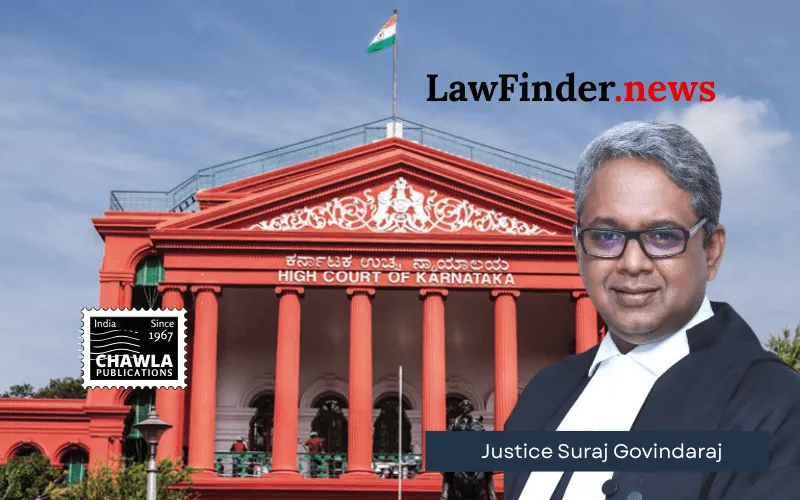
Justice Suraj Govindaraj, presiding over the case, quashed the rejection communications from the CGHS and issued a writ of mandamus directing the authorities to process the reimbursement along with interest. The court underscored that emergency medical treatment does not require prior approval and that the medical judgment of treating doctors must be respected. It further criticized the mechanical approach adopted by CGHS authorities in denying legitimate claims, noting that such actions undermine the trust in public administration and the welfare objectives of the scheme.
The judgment also addressed broader systemic issues, highlighting the inherent hardships in the reimbursement-based model of the CGHS. The court suggested the phased implementation of a cashless medical treatment mechanism to ensure that beneficiaries are not exposed to financial distress during medical emergencies. This recommendation aims to align the administration of the CGHS with constitutional values, ensuring that the right to health under Article 21 is effectively protected.
The case draws parallels with the Supreme Court's decision in Shiva Kant Jha v. Union of India, where similar issues of denial of reimbursement for life-saving procedures were addressed. The Karnataka High Court's ruling reinforces the principles established by the Apex Court, affirming that reimbursement under the CGHS is not merely an administrative discretion but a constitutional obligation.
Bottom Line:
Medical Reimbursement under CGHS - Constitutional obligation of the State under Article 21 - Emergency medical treatment reimbursement cannot be denied based on technical objections or retrospective evaluation of necessity.
Statutory provision(s): Article 21 of the Constitution of India, Central Government Health Scheme (CGHS), Doctrine of Promissory Estoppel, Legitimate Expectation
Mrs. Ivy Miller Chahal v. Union of India, (Karnataka) : Law Finder Doc Id # 2832003