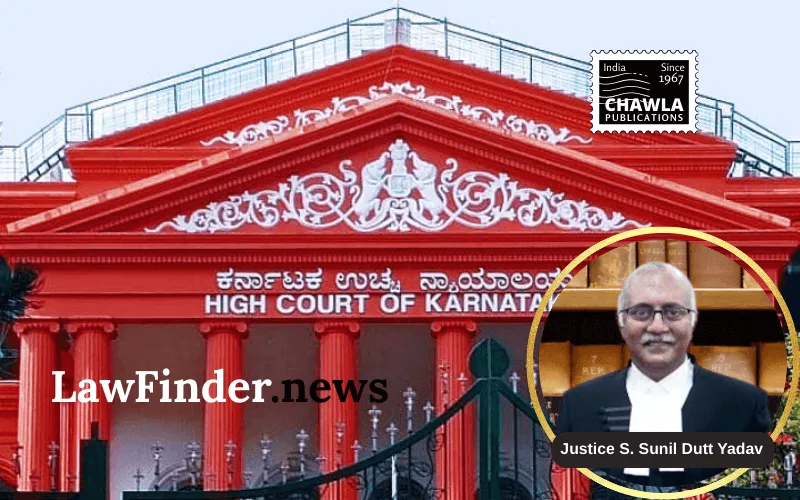
Special Court's Cognizance Overturned; Proceedings to Restart Under Magistrate Jurisdiction
In a pivotal decision dated February 19, 2026, the Karnataka High Court, under the stewardship of Justice S. Sunil Dutt Yadav, has nullified the cognizance taken by the LXXXI Additional City Civil & Sessions Judge in Bangalore in the defamation case involving Sri. Ravi Hegde and Kelachandra Joseph George. The case, which primarily revolves around charges under Sections 499 and 500 of the Indian Penal Code (IPC), will now proceed under the jurisdiction of a Magistrate's Court.
The petitioner, Ravi Hegde, initially faced proceedings in a Special Court designated for cases involving elected members. However, the High Court has clarified that offenses under Sections 499 and 500 IPC, which deal with defamation, are to be tried by a Magistrate and not a Sessions Court, even when one of the parties is an elected official.
The order comes as a rectification of procedural errors where the Sessions Court had initially taken cognizance. The High Court emphasized the importance of adhering to procedural correctness, pointing out that the Magistrate is the rightful authority to take cognizance of such offenses as per Section 190 of the Criminal Procedure Code, 1973.
This decision aligns with a clarification from the Supreme Court, which stipulated that Special Courts for elected members should not assume jurisdiction over cases that are triable by Magistrates unless explicitly provided. Consequently, all proceedings post-November 25, 2019, have been set aside, and the case will restart afresh in the jurisdictional Magistrate's Court.
The High Court's ruling underscores the necessity for legal proceedings to adhere strictly to jurisdictional mandates, ensuring that the judicial process is not only fair but also procedurally sound. This decision marks a significant precedent in cases involving elected officials, delineating clear boundaries for the jurisdiction of Special Courts.
Bottom Line:
Cognizance of offences under Sections 499 and 500 IPC must be taken by a Magistrate, and not by a Sessions Court, even if the complaint pertains to elected members unless explicitly stipulated otherwise.
Statutory provision(s):
Indian Penal Code, 1860 Sections 499 and 500; Criminal Procedure Code, 1973 Section 190
Sri. Ravi Hegde v. Kelachandra Joseph George, (Karnataka) : Law Finder Doc id # 2857677