Court affirms State's exclusive privilege over intoxicants, supports reservation-based eligibility and non-renewal of lapsed licences
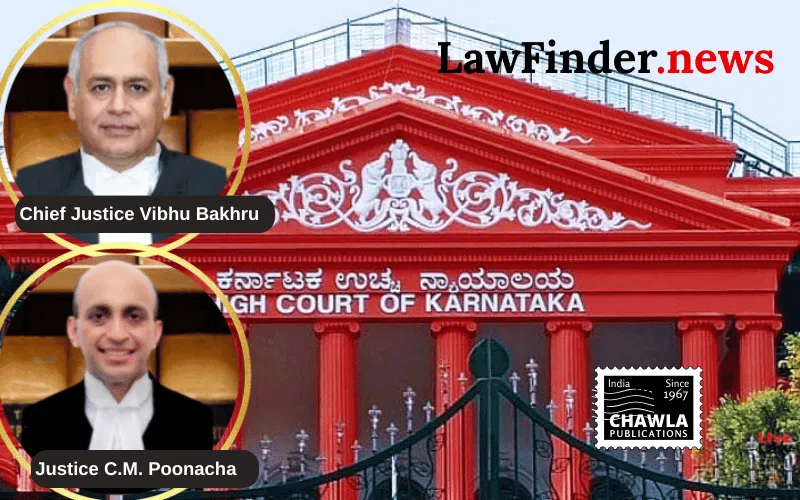
The Karnataka High Court has delivered a significant ruling, upholding the amendments to the Karnataka Excise Rules, 1968, introduced by the Karnataka Excise (Sale of Indian and Foreign Liquors) (Second Amendment) Rules, 2025. The Division Bench, consisting of Chief Justice Vibhu Bakhru and Justice C.M. Poonacha, overturned an earlier interim order that stayed the amendments, confirming the State Government's authority to regulate the manufacture, distribution, and sale of intoxicants within its jurisdiction.
The judgment was in response to an appeal filed by the State of Karnataka challenging the interim order passed by a Single Judge, which had temporarily halted the enforcement of amendments to Rule 5 and Rule 5A of the Karnataka Excise Rules. These rules introduced reservation-based eligibility criteria and provisions for non-renewal of certain lapsed licences.
The respondents in the case, former holders of CL-9 licences, argued that the amendments were unconstitutional and violated their vested rights by altering the conditions for licence renewal and imposing reservation criteria. However, the court dismissed these arguments, holding that the amendments were within the powers conferred by the Karnataka Excise Act, 1965.
The court emphasized that the State holds exclusive rights over the manufacture and sale of intoxicants and can stipulate varying terms for licences without breaching Article 14 of the Constitution, which guarantees equality before the law. The judgment clarified that there is no inherent right to the perpetual renewal of excise licences, and the State is entitled to revise the terms and conditions under which such licences are granted.
The court further noted that the State's decision to implement reservation norms in the auctioning of licences was permissible and did not amount to excessive delegation of legislative powers. It highlighted the principle that delegated legislation could include provisions for sub-delegation when the delegatee is the State Government itself.
The ruling underscored the presumption of constitutionality that legislative instruments enjoy, asserting that unless a strong case of invalidity is presented, such legislation should not be stayed. The decision reaffirms the State's prerogative to manage its excise policy, aiming to balance public interest and revenue considerations.
The appeal, which sought to lift the stay on the amended rules, was allowed, reinforcing the State's regulatory framework for the excise sector. The judgment is expected to have significant implications for the administration of excise laws in Karnataka, particularly concerning the allocation and renewal of licences for the sale of intoxicants.
Bottom Line:
Amendments to the Karnataka Excise Rules that introduce reservation-based eligibility criteria and the non-renewal of certain lapsed licences are within the State Government's rule-making powers under the Karnataka Excise Act, 1965. The State has exclusive privilege over the manufacture, distribution, and sale of intoxicants, and terms of licences can vary without violating Article 14 of the Constitution of India.
Statutory provision(s): Karnataka Excise Act, 1965, Article 14 of the Constitution of India, Section 71 of the Excise Act
State of Karnatak v. Sri. Guruswamy, (Karnataka)(DB) : Law Finder Doc id # 2883332