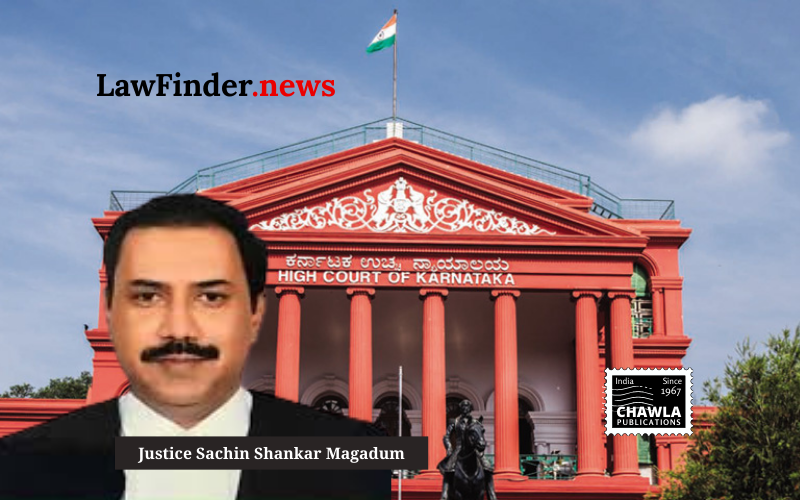
Petition to Quash Proceedings Under Section 153 IPC Denied; Court Emphasizes Need for Full-Fledged Trial
The Karnataka High Court, presided by Justice Sachin Shankar Magadum, has dismissed a petition filed by Althaf Hussain Yane Althaf Moosa seeking to quash the criminal proceedings against him under Section 153 of the Indian Penal Code (IPC). The proceedings stem from allegations that Moosa circulated an audio clip on WhatsApp containing scathing criticisms against government authorities, including the local MLA, during the COVID-19 pandemic.
The case against Moosa originated from a complaint lodged by respondent No.2, leading to the registration of Crime No.92/2020. Initially, the accusations included offences under Sections 153A and 505(2) IPC, but the charge sheet ultimately focused on Section 153 IPC, which pertains to promoting enmity and provoking disharmony.
Moosa's counsel argued that the audio clip, even if accepted at face value, did not constitute an offence under Section 153 IPC. They contended that the continuation of the prosecution amounted to an abuse of legal process. The counsel cited several judgments, including those from Anantkumar Dattatreya Hedge v. State of Karnataka and Aroon Purie v. H.L. Varma, to support their stance.
However, the Additional State Public Prosecutor countered that the audio clip contained provocative statements that misled the public and attempted to give a communal twist to the situation, potentially disturbing public order during a critical health crisis. The prosecutor highlighted Moosa's failure to appear before the trial court despite summons and his involvement in other criminal proceedings, arguing that the case warranted a full trial.
Justice Magadum, after reviewing the submissions and judgments cited, concluded that the allegations and the translated audio clip provided prima facie material sufficient for a full-fledged trial. The court emphasized that the audio clip's derogatory remarks and claims of financial exploitation during the pandemic could incite disaffection and disrupt communal harmony.
The judgment underscores the gravity of the allegations, particularly in the context of the pandemic's initial phase, and the necessity of determining whether Moosa acted recklessly or maliciously. The court dismissed the petition, affirming the charge sheet's validity and the need for Moosa to face trial. All pending applications related to the petition were also disposed of.
Bottom Line:
The court held that the statements made by the petitioner in the audio clip circulated on WhatsApp, which allegedly criticized the Government, local MLA, and State Authorities' handling of the COVID-19 pandemic, prima facie disclosed material sufficient to warrant a full-fledged trial under Section 153 IPC. The court refused to exercise inherent jurisdiction under Section 482 Cr.P.C. to quash the proceedings.
Statutory provision(s): Section 153 IPC, Section 482 Cr.P.C., Section 153A IPC, Section 505(2) IPC
Althaf Hussain Yane Althaf Moosa v. State of Karnataka, (Karnataka) : Law Finder Doc Id # 2797551