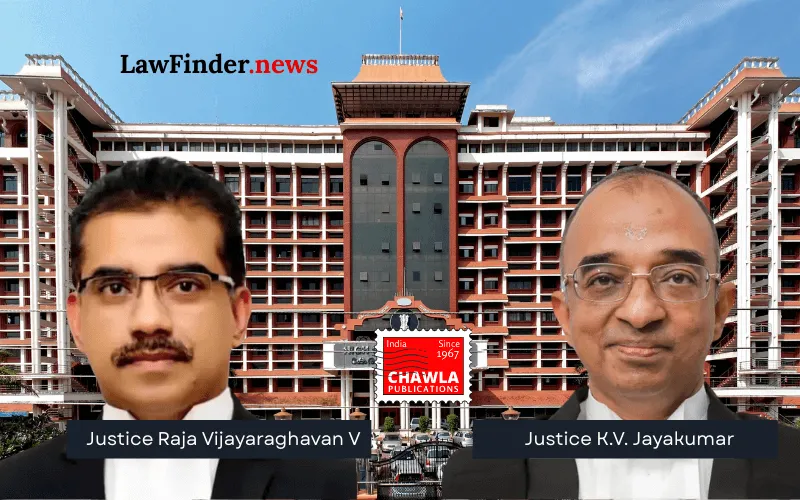
Kochi, Feb 11 The Kerala High Court on Wednesday noted that there were several issues and "serious inconsistencies" in the audit report of the Global Ayyappa Sangam held last year and directed the TDB to explain the reasons for the same.
A bench of justices Raja Vijayaraghavan V and K V Jayakumar also noted that the monetary value of certain items, like 'aravana', appam, vibhuti, kumkum and sandalwood, given to devotees and participants at the event has not been accounted for in the book of accounts.
"Having perused the auditor’s report placed before us pursuant to the directions issued by this court, and noting the nature of the qualifications and observations recorded therein, we are of the view that explanations and clarifications are required not only from the Travancore Devaswom Board (TDB) but also from the Kerala State Audit Department,...
"... so that appropriate directions may be considered and issued by this court in the matter of financial accountability and procedural compliance," the bench said and listed the matter on February 27.
The audit report was placed before the court as directed by it while dismissing the petitions challenging the Global Ayyappa Sangam.
After perusing the report, the bench said it highlighted various issues like execution of the work being given to the Indian Institute of Infrastructure and Construction (IIIC) without a tender or bidding process on an expenditure plus 10 per cent facilitating or administrative charge.
"The question that arises for consideration is whether the allocation of work and the payment of charges in the aforesaid manner are procedurally and financially in order," the court asked.
As per the report, there were also "serious inconsistencies" between the Bill of Quantity (BOQ) and the Joint Measurement Sheets (JMS) with regard to wooden frame centre tables and food serving charges in VIP areas, among others, the bench noted.
"The auditor has also recorded that agreements, commission structures, or 'centage' charges paid to subcontractors could not be verified due to the absence of supporting documentation," it said.
"There are also issues with regard to GST input credit as well," the court said.
It also said that the Special Commissioner has further noted that details relating to sponsorship income amounting to Rs 2 crore have not been furnished in the report.
"It has also been pointed out that a sum of Rs 2 crore drawn from the Travancore Devaswom Board general fund for the conduct of the event has not been recouped so far," the bench said.
The observations and directions of the bench came on a plea initiated by the court on its own based on the audit report.
Kochi, Feb 11 The Kerala High Court on Wednesday noted that there were several issues and "serious inconsistencies" in the audit report of the Global Ayyappa Sangam held last year and directed the TDB to explain the reasons for the same.
A bench of justices Raja Vijayaraghavan V and K V Jayakumar also noted that the monetary value of certain items, like 'aravana', appam, vibhuti, kumkum and sandalwood, given to devotees and participants at the event has not been accounted for in the book of accounts.
The court directed that the relevant inputs be obtained from the Kerala State Audit and the Travancore Devaswom Board (TDB), so that appropriate orders can be issued and listed the matter on February 27.
The audit report was placed before the court as directed by it while dismissing the petitions challenging the Global Ayyappa Sangam.
After perusing the report, the bench said it highlighted various issues like execution of the work being given to the Indian Institute of Infrastructure and Construction (IIIC) without a tender or bidding process on an expenditure plus 10 per cent facilitating or administrative charge.
As per the report, there were also "serious inconsistencies" in the computation of the estimated bill of quantity with regard to wooden frame centre tables, food serving charges in VIP areas and cost plus expenditure, the bench noted.
"There are also issues with regard to GST input credit as well," the court said.
The observations and directions of the bench came on a plea initiated by the court on its own based on the audit report.