Bail revoked due to failure to notify victim's family, highlighting stringent requirements under SC/ST (POA) Act, 2018.
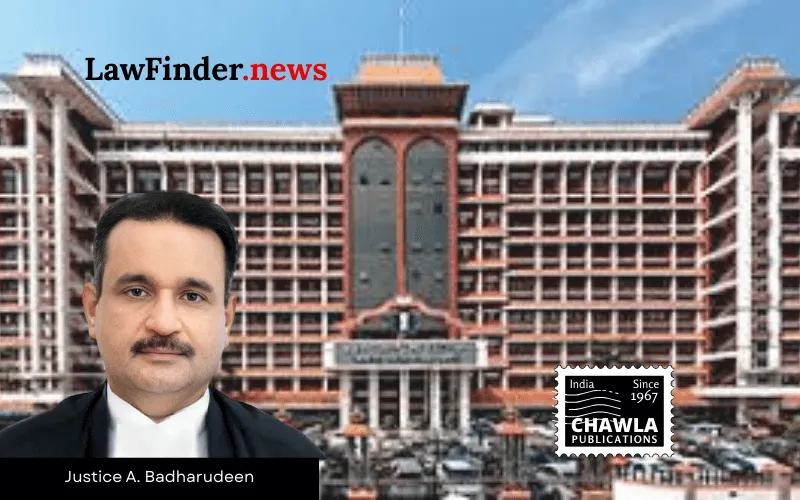
In a significant legal development, the Kerala High Court, under Justice A. Badharudeen, has cancelled the bail granted to several accused in a mob lynching case involving the brutal murder of a Jharkhand native, Ram Narayan Bhagel. The bail was initially granted by a lower court, which the High Court has now deemed as procedurally flawed due to non-compliance with the Scheduled Castes and Scheduled Tribes (Prevention of Atrocities) Act, 2018.
The case, which has drawn significant public attention, revolves around the lynching of Bhagel, a 40-year-old, who was allegedly attacked by a group of individuals in December 2025. The accused, who had been granted bail after varying periods of judicial custody, are now ordered to surrender within three days as per the High Court's directive.
The court's decision came after the prosecution, represented by Senior Public Prosecutor Sri. Vipin Narayan, argued that the lower court failed to notify the victim's family, a requirement under Section 15A(3) of the SC/ST (POA) Act. This section mandates that victims or their dependents must be informed of any court proceedings, including bail hearings, which the lower court overlooked.
The High Court emphasized the gravity of mob lynching cases, referencing the stringent provisions under the newly enacted Bharatiya Nyaya Sanhita, 2023. It highlighted that Section 103(2) specifically addresses mob lynching, imposing severe penalties to deter such heinous acts. The premature granting of bail was noted to potentially undermine the investigation's integrity.
Justice Badharudeen criticized the lower court for its failure to consider the statutory presumption of knowledge regarding the victim's caste identity, as provided under Section 8(c) of the SC/ST (POA) Act. He underscored that the procedural lapses, particularly the lack of notice to the victim's family, rendered the bail order non-est in law.
The High Court's ruling reflects a firm stance on ensuring compliance with statutory mandates, especially in cases involving vulnerable sections of society. The court has allowed for the possibility of fresh bail applications, provided they adhere to the legal requirements, including notifying the victim's dependents.
This judgment serves as a cautionary tale for lower courts to uphold procedural rigor and statutory mandates, especially in sensitive cases involving mob violence and atrocities against marginalized communities.
Bottom Line:
Bail granted in a mob lynching case was cancelled due to non-compliance with Section 15A(3) of the SC/ST (POA) Act, 2018, which mandates hearing the victim or their dependent, and procedural lapses in considering the gravity of the offence.
Statutory provision(s): Section 15A(3) of the SC/ST (POA) Act, 2018, Section 103(2) of Bharatiya Nyaya Sanhita, 2023, Section 8(c) of the SC/ST (POA) Act, 2018.
State of Kerala v. Anu, (Kerala) : Law Finder Doc id # 2868832