Court rebukes petitioner for procedural errors and improper courtroom decorum, emphasizing the correct legal avenues for appeal.
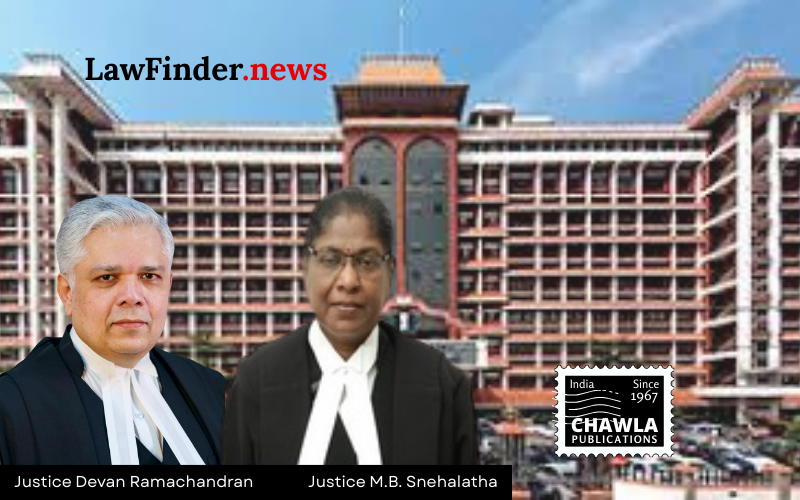
The Kerala High Court, in a notable judgment dated October 17, 2025, has dismissed a writ petition filed by Elizabeth Mathew, who sought to challenge a Family Court decree granting divorce to her husband, John Varghese. The Division Bench comprising Justice Devan Ramachandran and Justice M.B. Snehalatha criticized the petitioner's approach of filing a writ petition under Article 32 of the Constitution of India, an action deemed impermissible at the High Court level.
Elizabeth Mathew, appearing as a party-in-person, attempted to overturn an ex parte divorce decree issued by the Family Court in Ernakulam on September 20, 2022. The decree was granted on grounds of cruelty under Section 10(1)(x) of the Divorce Act. Instead of pursuing a statutory appeal under Order XVI of the Code of Civil Procedure (CPC), Mathew erroneously filed a writ petition, claiming the decree to be "null and void."
The court highlighted several procedural flaws in the petition and noted that Mathew's insistence on wearing professional robes while arguing her case was a breach of courtroom decorum. The judges exercised restraint despite Mathew's combative demeanor, which included raising her voice and making unfounded accusations against the Bench.
The petitioner argued that the Family Court failed to conduct an enquiry under Order XXXII, Rule 15 of the CPC regarding her mental capacity, despite her non-appearance. She asserted that such an enquiry was necessary due to allegations made by the respondent about her psychological issues. However, the High Court found this argument untenable, noting that Mathew had not sought to set aside the ex parte decree under Order IX, Rule 13 of the CPC.
The judgment underscored the impropriety of invoking Article 32 for matters that should be addressed through appropriate appellate procedures. Furthermore, the court expressed dismay at Mathew's lack of understanding of fundamental legal principles, questioning her claim to be an advocate given her disregard for professional ethics and courtroom propriety.
The court's decision to dismiss the writ petition does not preclude Mathew from filing a properly constituted appeal. The judgment serves as a reminder of the importance of adhering to procedural norms and maintaining decorum within the legal profession.
Bottom Line:
Filing a writ petition under Article 32 of the Constitution of India is impermissible before the High Court - Advocate appearing as party-in-person cannot wear professional robes while representing themselves in court.
Statutory provision(s): Article 32 of the Constitution of India, Order XVI of the Code of Civil Procedure, Order XXXII, Rule 15 of the CPC, Section 10(1)(x) of the Divorce Act, Order IX, Rule 13 of the CPC.
Elizabeth Mathew v. John Varghese, (Kerala)(DB) : Law Finder Doc Id # 2799332