Court Orders Further Investigation into Alleged Forgery and Caste Identity Awareness in Promissory Note Case
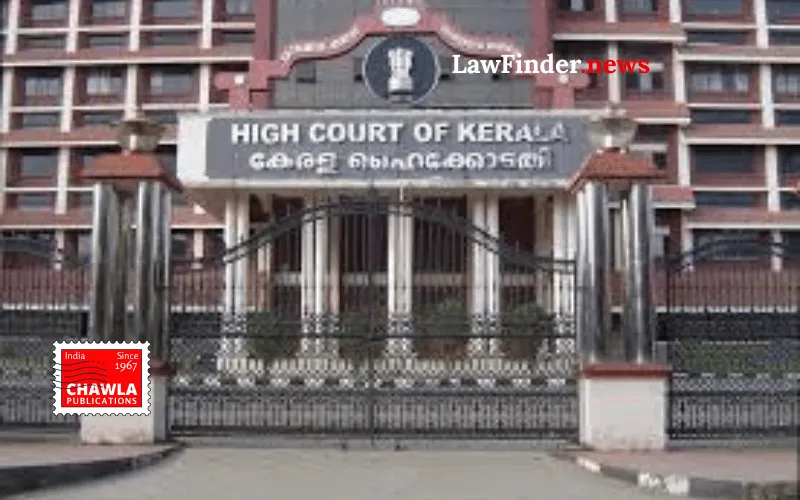
In a significant ruling, the Kerala High Court, under the judgment of Justice A. Badharudeen, has partially allowed a criminal appeal concerning allegations under the Scheduled Castes and Scheduled Tribes (Prevention of Atrocities) Act, 1989. The case, titled Velayudhan v. State Of Kerala, revolved around an alleged false and malicious suit filed by a kuri company against members of a Scheduled Caste, using a purportedly forged promissory note.
The appellant, Velayudhan, challenged the decision of the Special Court under the SC & ST (PoA) Act, which had dismissed an application to monitor the investigation of the case. The core of the appellant's argument was that the suit was filed with malicious intent, and the promissory note presented was a forged document. The investigating officer's report, which led to the deletion of offences under Sections 3(1)(p) and 3(1)(q) of the SC & ST (PoA) Act, was also contested.
The High Court, after thorough examination, found that the Special Court’s deemed acceptance of the investigating officer's report was not justified, particularly due to the statutory presumption under Section 8(c) of the SC & ST (PoA) Act. This provision presumes that if the accused had personal knowledge of the victim or their family, they were aware of the victim's caste identity unless proven otherwise.
Justice Badharudeen highlighted that the kuri company, involved in chitty business, should have been aware of the caste identity of the defendants, thus necessitating further investigation. The Court directed the investigating officer to seize the promissory note for forensic examination to determine its authenticity, a step deemed crucial for establishing a prima facie case under Section 3(1)(q) of the SC & ST (PoA) Act.
While the High Court upheld the Special Court's decision that it need not monitor the investigation, it emphasized the necessity of a thorough probe to ensure justice. The investigating officer is now tasked with conducting a detailed investigation, including obtaining expert opinions from a forensic science laboratory, to ascertain the genuineness of the promissory note.
This judgment underscores the judiciary’s role in safeguarding the rights of Scheduled Caste members against false and malicious legal actions and reiterates the importance of adhering to statutory presumptions in such cases.
Bottom Line:
Scheduled Castes and Scheduled Tribes (Prevention of Atrocities) Act, 1989 - Presumption under Section 8(c) - Accused presumed to be aware of the caste or tribal identity of the victim if accused has personal knowledge of the victim or his family, unless rebutted with evidence.
Statutory provision(s): Scheduled Castes and Scheduled Tribes (Prevention of Atrocities) Act, 1989 - Sections 3(1)(p), 3(1)(q), 8(c), 14A; Indian Penal Code - Sections 465, 468, 471.
Velayudhan v. State of Kerala, (Kerala) : Law Finder Doc id # 2851292