Court Rules Appointment Violates Statutory Provisions and Judicial Directions, Reinstates Trustee's Administrative Powers
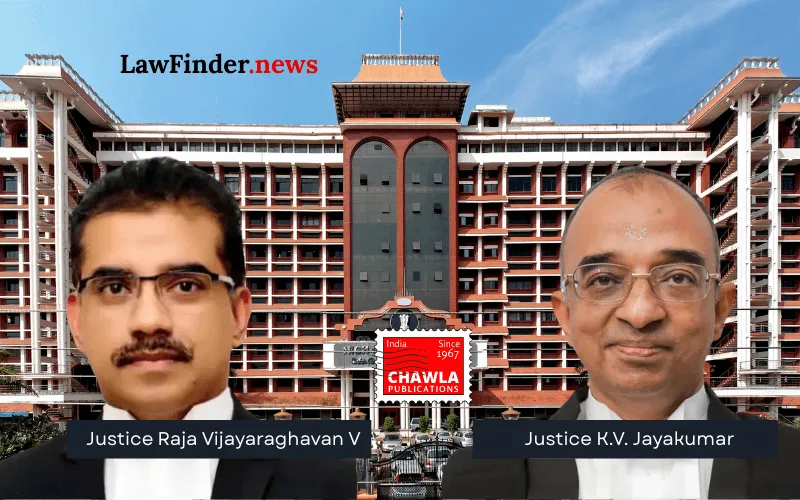
In a significant ruling, the Kerala High Court quashed the Malabar Devaswom Board's appointment of a full-time Executive Officer to the Sree Annapoorneswari Temple in Puthucode, underscoring the necessity for temple administration to adhere to established statutory provisions and judicial directions. The judgment, delivered by a bench comprising Justices Raja Vijayaraghavan V. and K.V. Jayakumar, reinstated the administrative powers of the hereditary trustee and the manager appointed under the temple's existing scheme.
The petitioner, Edamana Vasudevan Namboothiri, challenged the Board's decision to appoint Sri R. Radmesh as the full-time Executive Officer, arguing that it contravened the administration scheme outlined in Ext.P1 and violated prior judicial directions. The court agreed, highlighting that the commissioner's power under Section 20 of the Hindu Religious and Charitable Endowments Act does not extend to replacing a manager appointed by a hereditary trustee.
The court emphasized that such an appointment undermines the statutory framework and judicial precedent, notably the decisions in "Parakkad Sree Bhagavathi Devaswom v. Malabar Devaswom Board" and "A.C. Bhanunni v. Hindu Religious & Charitable Endowments (Admn.) Department." These rulings assert that the Board's supervisory role does not equate to direct administrative authority over temples managed by hereditary trustees.
In its judgment, the court reiterated that any allegations of maladministration should be addressed through proper channels as outlined in Section 45 of the HR & CE Act, which mandates due process including charge framing and opportunity for defense. The court found no such due process was followed in the impugned orders.
Furthermore, the court clarified that the availability of an alternative remedy, such as filing a revision, does not preclude the maintainability of a writ petition when the orders in question are patently illegal. It instructed the petitioner to maintain transparency and adhere to statutory requirements concerning budget, accounts, and audits.
The ruling reinforces the judiciary's role in upholding the autonomy and traditional management structures of religious institutions, ensuring they operate within the legal frameworks established to protect their integrity and heritage.
Bottom Line:
The Malabar Devaswom Board cannot appoint a full-time Executive Officer to replace the Manager appointed by a hereditary trustee under the temple's administration scheme without adhering to statutory provisions and judicial directions.
Statutory provision(s): Hindu Religious and Charitable Endowments Act, Sections 20, 45, Constitution of India, Article 226
Edamana Vasudevan Namboothiri v. Malabar Devaswom Board, (Kerala)(DB) : Law Finder Doc id # 2876063