In a landmark judgment, the Kerala High Court reaffirms that limited estates granted to Hindu widows under wills evolve into absolute ownership, impacting managerial rights over educational institutions.
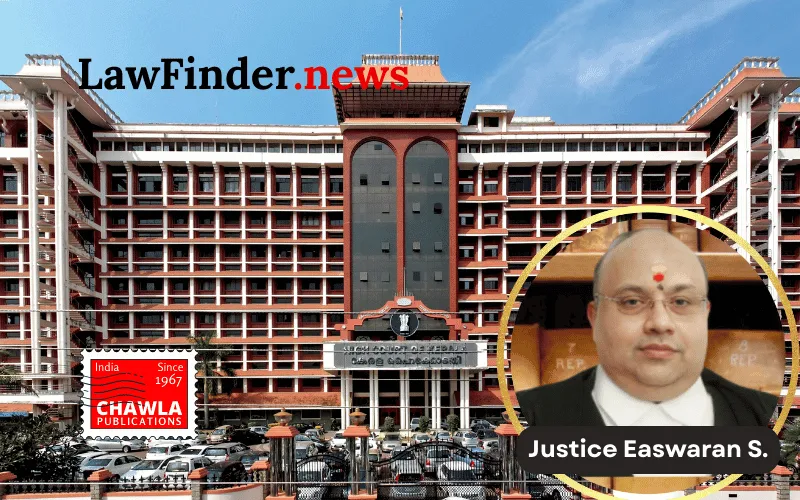
The Kerala High Court, in a significant ruling on March 9, 2026, upheld the absolute ownership rights of Hindu widows over properties bequeathed to them, dismissing claims to managerial rights over a school by other heirs. The judgment, delivered by Justice Easwaran S., highlights the interplay between Sections 14(1) and 14(2) of the Hindu Succession Act, 1956, affirming the principle that limited estates conferred on Hindu widows transform into absolute ownership under Section 14(1).
The appeals involved disputes over the management of the Mooriyad Central Upper Primary School, initially vested by will to Bachi @ Janaki, the widow of Koran Gurukkal. The court ruled that upon Janaki's death, the limited managerial rights specified in her husband’s will evolved into absolute ownership, invalidating subsequent claims by other heirs.
The court referenced the landmark Supreme Court judgment in V. Tulasamma v. Sesha Reddy, asserting that subsequent inconsistent bequests in a will are invalid if they attempt to limit the absolute rights conferred under Section 14(1). The court dismissed the plaintiff's appeal for a declaratory relief regarding managerial rights, emphasizing the necessity to challenge the settlement deeds impacting ownership claims.
The ruling also directed educational authorities to approve the managerial appointments made by the appellant, who was recognized as the legitimate manager following the widow's death. This decision reinforces the legal standing of Hindu widows in property rights, underscoring the invalidity of subsequent restrictive bequests.
Bottom Line:
Interpretation of Hindu Succession Act, 1956 - Section 14(1) confers absolute ownership on a female Hindu for property possessed by her unless a restricted estate is specified under Section 14(2). Subsequent bequest in a will limiting such absolute ownership is invalid as per Section 95 of the Indian Succession Act, 1925.
Statutory provision(s): Hindu Succession Act, 1956 Sections 14(1) and 14(2), Indian Succession Act, 1925 Section 95, Specific Relief Act, 1963 Section 34
P.K. Lakshmi v. Gopi, (Kerala) : Law Finder Doc id # 2869101