Court Affirms Posthumous Bodily Integrity, Validating Deceased's Written Consent Despite Family Opposition
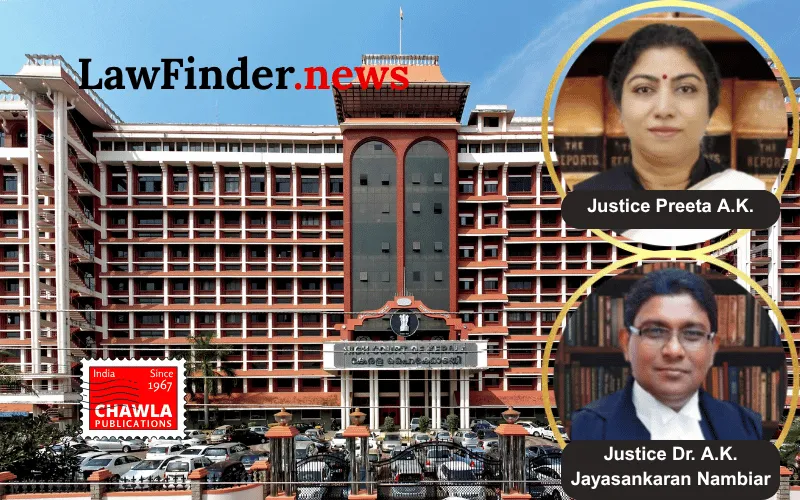
In a landmark judgment, the Kerala High Court has upheld the wishes of a deceased individual to donate her body for anatomical purposes, despite objections from her legal heirs. The Division Bench, comprising Dr. A.K. Jayasankaran Nambiar and Preeta A.K., dismissed the appeal filed by Greeny Tomy and others, challenging the retention and proposed use of their deceased mother's body for educational purposes at the Government Medical College Hospital, Kalamassery.
The case revolved around the posthumous bodily integrity of the deceased, Mary, who had expressed her desire to donate her body for educational purposes through a valid consent letter under Section 4A of the Kerala Anatomy Act, 1957. Her wishes were opposed by some of her children, who argued for the release of the body to perform last rites according to their religious customs.
The appellants contended that they had not consented to the anatomical donation and sought a writ of mandamus for the release of the body. However, the respondents, including Mary's eldest daughter Elizabeth and her husband, argued that the deceased had been under their care and had unequivocally expressed her intention to donate her body, as evidenced by the consent letter.
The court emphasized the legal recognition of a deceased person's rights and posthumous bodily integrity. It noted that the deceased's written consent was a clear expression of her wishes and should be honored, as per the provisions of the Kerala Anatomy Act, 1957. The judgment highlighted that mere opposition by legal heirs could not override the deceased's explicit intentions.
In its decision, the court cited jurisprudence on the rights of deceased individuals, asserting that the law respects and protects the wishes expressed by a person during their lifetime regarding the fate of their body after death. The court acknowledged the importance of honoring a person's desires for anatomical donation as a commitment to society.
The ruling aligns with the broader legal framework that upholds the wishes of deceased individuals, as seen in legislation like the Transplantation of Human Organs and Tissues Act, 1994. The court dismissed the appeal, affirming the legality of the anatomical donation based on the deceased's consent letter, and emphasized that the law seeks to protect the posthumous bodily integrity of individuals.
This judgment sets a precedent in recognizing the autonomy and posthumous rights of individuals, and underscores the significance of written consent in anatomical donations. The ruling serves as a reminder that personal wishes expressed during one's lifetime hold legal weight, even in the face of familial opposition.
Bottom line:-
Kerala Anatomy Act, 1957 - Consent for anatomical donation - Wishes of the deceased expressed in writing during her lifetime must be honored, even if opposed by legal heirs.
Statutory provision(s): Kerala Anatomy Act, 1957 Section 4A, Transplantation of Human Organs and Tissues Act, 1994
Greeny Tomy v. State of Kerala, (Kerala)(DB) : Law Finder Doc id # 2915335