Court affirms Armed Forces Tribunal's decision, stresses on the need for reasoned medical board findings in disability cases.
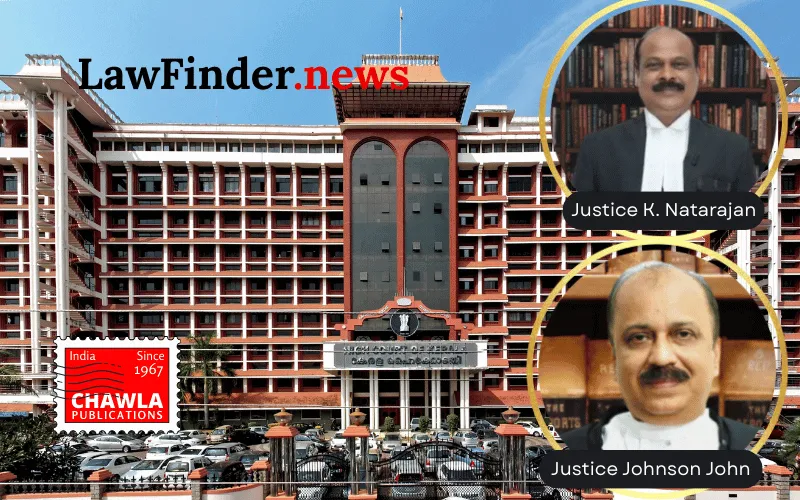
In a significant ruling, the Kerala High Court has dismissed a writ petition filed by the Union of India challenging the Armed Forces Tribunal's decision to grant disability pension to the widow of a deceased army veteran. The bench, comprising Justices K. Natarajan and Johnson John, upheld the tribunal's order, emphasizing the importance of a liberal and beneficial interpretation of social security legislations related to armed forces' disability pensions.
The case involved the widow of late Sreekandan Nair, who was diagnosed with schizophrenia during his military service and subsequently invalided out. Despite being assessed at a 60% disability, his claim for a disability pension was initially rejected by the authorities. The Armed Forces Tribunal, however, granted the pension, noting that the medical board's conclusion of the disability being constitutional lacked sufficient reasoning.
The Union of India, represented by Central Government Counsel S. Vaidyanathan, contended that the tribunal overstepped its jurisdiction by questioning the medical board's findings. The counsel argued that the board had clearly stated that the disability was neither attributable to nor aggravated by military service. On the other hand, the respondent's counsel, Smt. Rati Varma, maintained that the onus to prove that the disability was not linked to military service rested with the authorities, especially when no adverse physical factor was noted at the time of enrolment.
The High Court, in its judgment, reiterated the need for a liberal interpretation of social security legislations, stating that disability pension provisions must be construed widely to benefit the servicemen. It highlighted that when an individual is enrolled in the army without any noted physical issues, any subsequent disability should be presumed to have arisen due to service, unless convincingly proven otherwise by the authorities.
The court also pointed out that the medical board's failure to provide reasons for its findings rendered its opinion invalid. Citing precedents, the judgment underscored that an unreasoned opinion denying post-discharge benefits could be legally challenged.
In dismissing the writ petition, the Kerala High Court upheld the tribunal's decision, thereby affirming the entitlement of late Sreekandan Nair's widow to the disability pension. The ruling is expected to have broader implications for similar cases involving the armed forces, reinforcing the judiciary's role in ensuring fair treatment for service-related disabilities.
Bottom line:-
Armed Forces - Disability pension - Schizophrenia - Beneficial interpretation of social security legislation - Medical board's finding devoid of reasons can be questioned - Onus of proving disability not attributable to service lies on authority - Statutory presumptions under Entitlement Rules and Regulations for Medical Services must be considered.
Statutory provision(s): Article 226 of the Constitution of India, Entitlement Rules for Casualty Pensionary Awards, 1982, Regulations for Medical Services for Armed Forces, 1983
Union of India v. Valsala S., (Kerala)(DB) : Law Finder Doc id # 2907211