Private Residence Considered Public View for SC/ST Act Charges, Appeals Court
In a significant ruling, the Kerala High Court has upheld the decision of the Special Court in Kottarakara, confirming the cognizance of offences under the Scheduled Castes and the Scheduled Tribes (Prevention of Atrocities) Act, 1989, against Santhosh Kumar, the appellant. The appeal, filed by Kumar, challenged the Special Court's order that found prima facie evidence of offences under the SC/ST Act and the Indian Penal Code (IPC).
The case revolved around an incident that took place at the complainant's residence, raising questions about whether the location qualifies as a "place within public view" under the SC/ST (Prevention of Atrocities) Act. The appellant argued that the offences could not be established as the incident occurred within a private dwelling, contending that such a location does not meet the criteria stipulated by the Act.
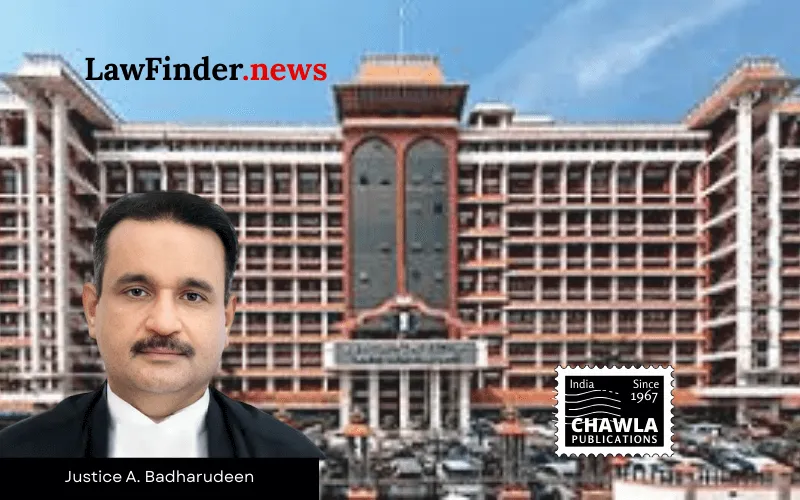
However, the High Court, led by Justice A. Badharudeen, dismissed these arguments. The judgment highlighted that the presence of public witnesses at the time of the incident, including CW4, effectively transformed the private residence into a place within public view. This interpretation aligns with the provisions of the SC/ST Act, which aim to ensure justice for individuals from Scheduled Castes and Tribes, even when the abusive incident occurs in ostensibly private settings.
The Court reinforced that the presence of witnesses at the scene played a crucial role in fulfilling the conditions laid down under the Act. Despite being a private residence, the occurrence of the incident in view of public witnesses justified the charges under Sections 3(1)(s), 3(1)(w)(i), and 3(2)(va) of the SC/ST Act, along with Section 506 of the IPC.
The High Court affirmed that the Special Court had rightly dismissed the appellant's plea for discharge based on the prima facie evidence presented by witness statements and prosecution records. The ruling underscores the judiciary's commitment to interpreting the SC/ST Act in a manner that upholds the rights and protections intended for marginalized communities.
In conclusion, the appeal was dismissed, and the High Court directed the Special Court to expedite the trial proceedings in S.C. No. 807/2025. The judgment signifies a pivotal interpretation of the SC/ST Act, emphasizing that private settings can indeed be deemed public view if public witnesses are present during an offence.
Bottom line:-
SC/ST (Prevention of Atrocities) Act - A private place can be deemed as a place within public view if, during the occurrence of the offence, public witnesses were present to observe or hear the abusive words, thereby fulfilling the conditions laid down under the Act.
Statutory provision(s):
Scheduled Castes and the Scheduled Tribes (Prevention of Atrocities) Act, 1989 Sections 3(1)(s), 3(1)(w)(i), 3(2)(va); Indian Penal Code, 1860 Section 506
Santhosh Kumar v. State of Kerala, (Kerala) : Law Finder Doc id # 2921935