New Delhi, May 23 The Supreme Court has emphasised that legal aid to an accused person must not be a mere ritual or a token formality, but a substantive and meaningful exercise that ensures effective assistance of counsel.
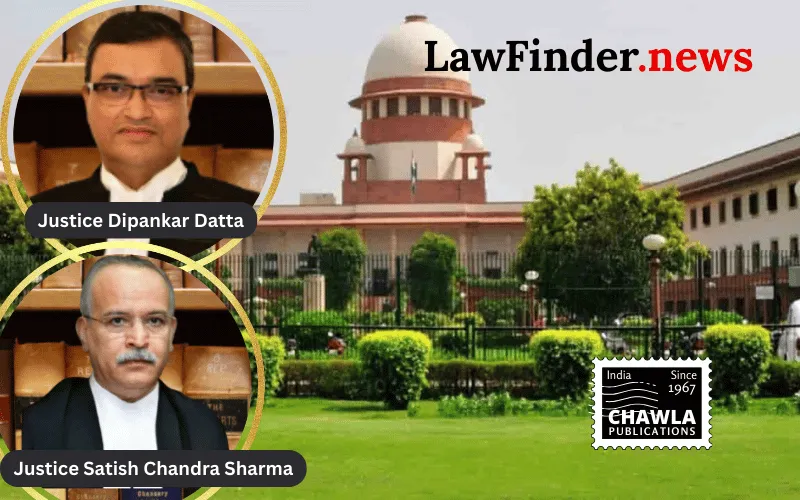
A bench of Justices Dipankar Datta and SC Sharma made the observation in the verdict on a plea filed by septuagenarian Nandkishore Mishra, who has been awarded a life sentence by the trial court for the offence of murder.
The bench noted that the accused, who is 74 years of age, was lodged in a correctional home in Madhya Pradesh, and the high court, on finding that no one appeared for him during the hearing of his appeal against conviction and sentence, appointed an amicus to assist the court and represent the accused.
It noted that the amicus was appointed on November 20, 2025, and the high court disposed of the matter on November 26, 2025, during which period no notice was issued to the accused intimating him about the hearing of the appeal, nor did the amicus meet him.
The top court bench, in its decision uploaded on Friday, said that the Madhya Pradesh high court, in its anxiety to deliver justice without further delay and decide the appeal expeditiously, had not attempted to inform the appellant (Mishra) that, in the absence of representation from his side, an amicus had been appointed to represent him.
"Furthermore, it also does not seem that the amicus had any opportunity to interact with the appellant, who was lodged in a correctional home. The high court was under no obligation to inform the appellant regarding the absence of his advocate. Nevertheless, it would have been a prudent and desirable step had the appellant been intimated of the same," it said.
The top court further said, "This acquires added significance in light of the consistent view taken by this Court that legal aid to an accused person must not be a mere ritual or a token formality, but a substantive and meaningful exercise that ensures effective assistance of counsel."
The bench said that while there can be no doubt about the bona fide intention of the high court in appointing an amicus to represent convict, whose advocate is not present to argue his appeal with a view to advancing the cause of justice, it would perhaps have better served the ends of justice had a formal notice been issued to the appellant informing him of the hearing and the arrangement made for his representation.
"Such a course becomes all the more imperative where, as in the present case, the appellant remained incarcerated during the pendency of the appeal," it said, while ordering a de-novo hearing on his appeal by the high court.
It said the court has laid two principles to be followed in case an amicus is appointed – first, that the amicus must be afforded reasonable time to prepare the matter; and second, that adequate opportunity must be granted to the amicus to meet and confer with the accused/convict concerned.
The bench noted that, admittedly, neither of these directions appears to have been complied with in the present case.
"Needless to say, judicial time is both valuable and finite, and ought not to be expended in a casual or avoidable manner," the bench said, while directing compliance with the two principles in appointment of the amicus to represent the accused.
The top court set aside the November 26, 2025, order of the high court and remanded the matter back to the high court.
"The appeal may be listed on any date within two months of this judgment. Preferably, the very same member judges of the division bench who had the occasion to decide the appeal on November 26, 2025, may be assigned to hear the appeal, but subject to their availability.
"If such an assignment is not possible or is unworkable, we request the Chief Justice of the high court assign the appeal to a division bench of which at least one of the member judges, who earlier decided the appellant's appeal, forms the quorum," the top court said.
The bench stated that, taking note of the fact that Mishra is a septuagenarian, it would be eminently desirable if the division bench of the high court decides the appeal as early as possible from the date of the first hearing.
Mishra has been in custody since October 16, 2020, the date of the incident and was convicted and sentenced to life by the trial court on December 20, 2022.
Nandkishore Mishra v. State of Madhya Pradesh, (SC) : Law Finder Doc Id # 2905260