Court Orders Inquiry Against Investigating Officer for Forged Evidence and Directs FIR Registration
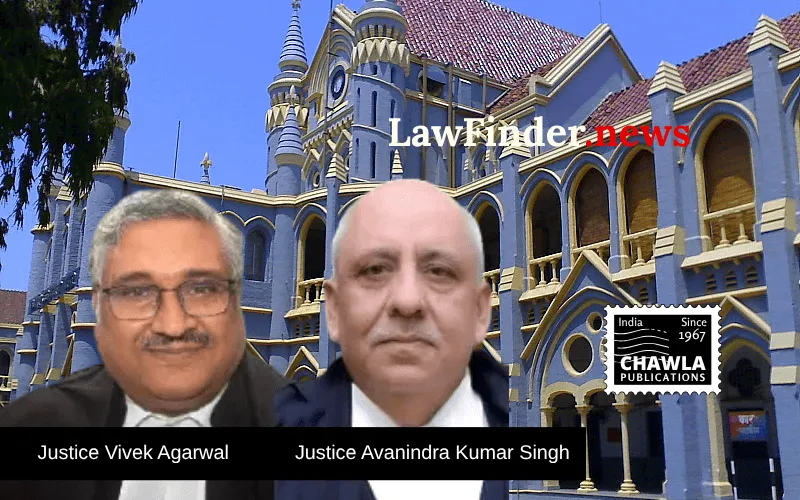
In a landmark judgment delivered by the Madhya Pradesh High Court, the convictions of eight appellants in the case of Madhu Yadav v. State of Madhya Pradesh were overturned due to significant lapses and misconduct during the investigation. The appeals, stemming from convictions under various sections of the Indian Penal Code, including 120B, 147, 364 read with 149, and 302 read with 149, were allowed by the division bench comprising Justice Shri. Vivek Agarwal and Justice Avanindra Kumar Singh.
The court found that the investigation conducted by the police was severely flawed, with evidence being planted and the chain of circumstances left incomplete. Oral dying declarations, considered inadmissible due to lack of corroborative evidence, were pivotal in the initial conviction but were rightly discarded by the High Court upon review. The court emphasized that the prosecution failed to prove guilt beyond reasonable doubt, a cornerstone of criminal justice.
Furthermore, the judgment highlighted misconduct by the investigating officer, Shri A.H. Rizvi, who was found to have forged evidence and created false records. The High Court directed the Director General of Police to conduct an inquiry against Shri Rizvi and register a First Information Report (FIR) for fabricating evidence and committing criminal contempt of court. The judgment underscored the necessity for impartiality in investigations and warned against any partisan behavior that undermines justice.
The appeals were filed after a judgment from the Sessions Court had convicted the appellants, sentencing them to life imprisonment, among other penalties. The High Court noted several inconsistencies in the prosecution's case, including unreliable testimonies from witnesses who had prior exposure to the accused while in police custody, compromising the credibility of the Test Identification Parade (T.I.P).
The judgment also noted the improper conduct during the investigation, including the planting of evidence, such as clothing allegedly belonging to the deceased, which contradicted the findings from the original Panchayatnama. The court concluded that the conviction could not be sustained based on such compromised evidence and ordered the immediate release of the appellants if they were not required in any other case.
This decision serves as a reminder of the importance of thorough and unbiased investigations within the criminal justice system, ensuring that justice is served without prejudice or manipulation of evidence.
Bottom line:-
Conviction cannot be maintained when the investigation is botched up, evidence is planted, and chain of circumstances is incomplete. Oral dying declarations, which are not supported by corroborative evidence, are inadmissible. Serious lapses in investigation and misconduct by the Investigating Officer can lead to acquittal.
Statutory provision(s): Indian Penal Code, 1860 Sections 120B, 147, 364 read with 149, 302 read with 149; Criminal Procedure Code, 1973 Section 161.
Madhu Yadav v. State of Madhya Pradesh, (Madhya Pradesh)(DB)(Jabalpur) : Law Finder Doc id # 2891868