Succession Certificate Not Required; Son Granted Priority Over Married Sister in Appointment Dispute
In a significant ruling, the Madhya Pradesh High Court has resolved a dispute over compassionate appointments following the death of a government employee. The court clarified that a succession certificate is not required for compassionate appointments, emphasizing that such appointments are not inheritable rights but concessions to aid families in financial distress.
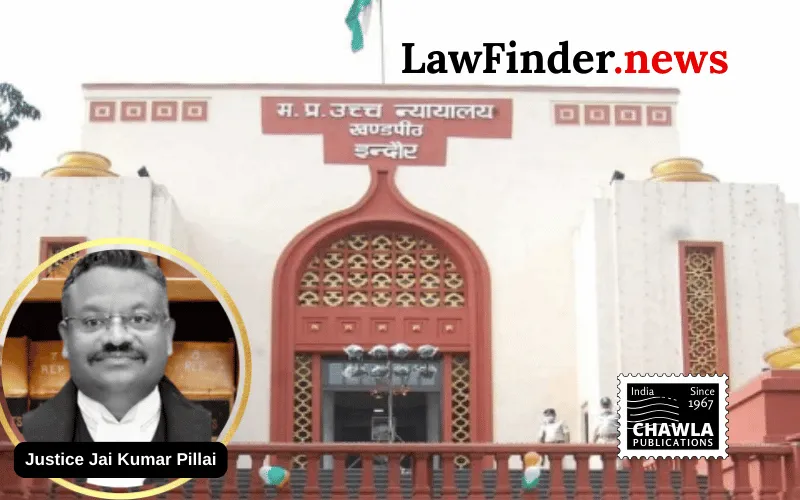
The judgment, delivered by Justice Jai Kumar Pillai, addressed rival claims between siblings Ritesh Van and Anita Van after the death of their father, Shri Rameshvan Goswami, a government employee. Ritesh Van petitioned for compassionate appointment, while Anita Van sought the same position, contesting her brother's claim.
Justice Pillai ruled that the demand for a succession certificate by the respondent authorities was arbitrary and without legal authority. Compassionate appointments, the court noted, are governed by specific policies that aim to support bereaved families, not to distribute inheritance.
The court referred to the Compassionate Appointment Policy of 2014, which outlines the hierarchy of eligible dependents. Under this policy, a son is given statutory priority over a married daughter. Anita Van, being a married daughter, did not qualify for the compassionate appointment under the policy applicable at the time of their father's death in June 2020.
Despite amendments in 2023 that removed distinctions between married and unmarried daughters, the court held these changes could not be applied retrospectively. Therefore, the 2014 policy remained applicable, favoring Ritesh Van’s claim.
The court dismissed Anita Van's petition and allowed Ritesh Van's application for compassionate appointment. It directed the authorities to process his application in line with the 2014 policy, underscoring the importance of prioritizing eligible dependents as per the established hierarchy.
Justice Pillai also imposed a condition that Ritesh Van must maintain and care for his mother and other dependents, with a warning that failure to fulfill this obligation could lead to revocation of his appointment.
This ruling is expected to have far-reaching implications for similar disputes, reinforcing the need to adhere strictly to the policies in place at the time of an employee's death.
Bottom line:-
Compassionate appointment claims must adhere strictly to the eligibility hierarchy under the applicable policy at the time of the employee's death, and a succession certificate is not required for such appointments.
Statutory provision(s): Article 226 of the Constitution of India, Compassionate Appointment Policy (M.P. Government), 2014
Riteshwan v. State of Madhya Pradesh, (Madhya Pradesh)(Indore) : Law Finder Doc id # 2893324