Scientific Archaeological Survey Confirms Pre-existing Paramara Period Temple Beneath Mosque; Court Upholds Hindu Right to Unrestricted Worship and Directs ASI Management, While Dismissing Muslim and Jain Claims
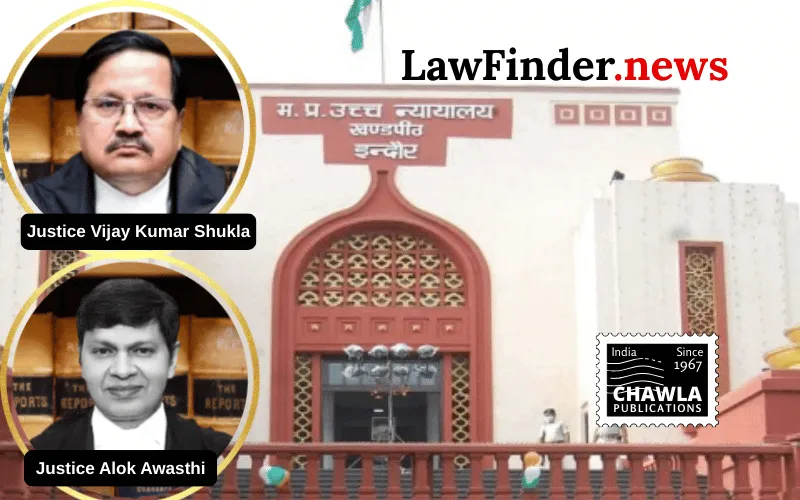
In a landmark judgment delivered on May 15, 2026, the Madhya Pradesh High Court (Division Bench at Indore) resolved the long-standing dispute over the religious character and management of the Bhojshala and Kamal Maula Mosque complex located in Dhar district. The Court held that the disputed area is a protected monument under the Ancient Monuments and Archaeological Sites and Remains Act, 1958 (effective retrospectively from 1904), and declared its religious character to be that of Bhojshala with a temple dedicated to Goddess Vagdevi (Saraswati).
The case involved multiple writ petitions and a writ appeal filed by Hindu, Muslim, and Jain parties contesting worship rights and the site's religious status. The Hindu Front for Justice and Kuldeep Tiwari petitioned for exclusive Hindu worship rights and the removal of restrictions imposed by the Archaeological Survey of India (ASI) order dated April 7, 2003, which allowed Muslims to offer Namaz on Fridays and restricted Hindu worship to specific days and timings. The Muslim community, represented by the Maulana Kamaluddin Welfare Society and others, claimed exclusive mosque rights. The Jain community sought recognition of the site as a Jain temple. The State and ASI were respondents in all petitions.
A core feature of the litigation was the comprehensive scientific investigation, survey, and excavation conducted by the ASI under Court direction, employing modern techniques such as Ground Penetrating Radar (GPR), GPS mapping, and detailed stratigraphic analysis. The ASI's report, presented in ten volumes, revealed that the current structure was constructed over a pre-existing large temple structure dating back to the Paramara period (10th-11th century CE). The findings included more than 150 Sanskrit and Prakrit inscriptions, numerous sculptures of Hindu deities such as Ganesha, Brahma, Narasimha, and Bhairava, and architectural members typical of Hindu temple construction. The report noted mutilation of many images consistent with the conversion of a temple into a mosque. The scientific evidence and historical literature, including inscriptions mentioning "Sharada Sadan" and references to Raja Bhoj’s Sanskrit learning center established in 1034 AD, supported the temple character of the site.
The Court referred extensively to the ten principles laid down in the Supreme Court’s Ayodhya judgment, emphasizing that disputes involving religious character must be adjudicated on the preponderance of probabilities and that archaeological evidence has significant probative value. The Court rejected claims that the site was originally a mosque or exclusively a Jain temple, finding insufficient evidence for these assertions. It held that the order dated August 24, 1935, by Dhar State permitting Muslim prayers lacked legal validity, being inconsistent with the constitutional framework and the statutory protection under the Ancient Monuments Act.
Significantly, the Court quashed the ASI order dated April 7, 2003, insofar as it restricted Hindu worship and permitted Muslim prayers within the Bhojshala complex, holding that this violated the statutory duty of ASI under Section 16 of the 1958 Act to preserve the religious character of protected monuments. The Court directed the Government of India to consider the creation of a trust for administration and management of the Bhojshala temple and Sanskrit learning activities, with ASI maintaining overall control for preservation. The Court also left open the Government’s consideration of requests by the Muslim community for alternative land allotment within Dhar for mosque construction, to ensure communal harmony and justice.
The petitions filed by the Jain community and Muslim parties seeking exclusive religious rights or prohibiting others were dismissed. The Court underscored the constitutional obligation of the State and ASI to protect not only the ancient monument but also the sanctity of the deity and the fundamental right of all communities to worship in accordance with the law.
This judgment is expected to provide a definitive resolution to the decades-long conflict over the Bhojshala-Kamal Maula site, reinforcing the primacy of archaeological evidence and constitutional protections in adjudicating religious disputes related to protected monuments.
Bottom Line:
The disputed area of 'Bhojshala and Kamal Maula Mosque' is held to be a protected monument with historical significance, and its religious character is established as Bhojshala with a temple of goddess Vagdevi (Saraswati).
Statutory provision(s):
Ancient Monuments Preservation Act, 1904; Ancient and Historical Monuments and Archaeological Sites and Remains (Declaration of National Importance) Act, 1951; Ancient Monuments and Archaeological Sites and Remains Act, 1958, Section 16; Places of Worship (Special Provisions) Act, 1991, Section 4(3); Constitution of India, Articles 13, 14, 21, 25, 26, 29, 51A; Muhammadan Law principles on Waqf; Indian Evidence Act, Section 45.