Petition by Akash Tiwari against BSNL Rejected Due to Lack of Immediate Financial Crisis and Delay
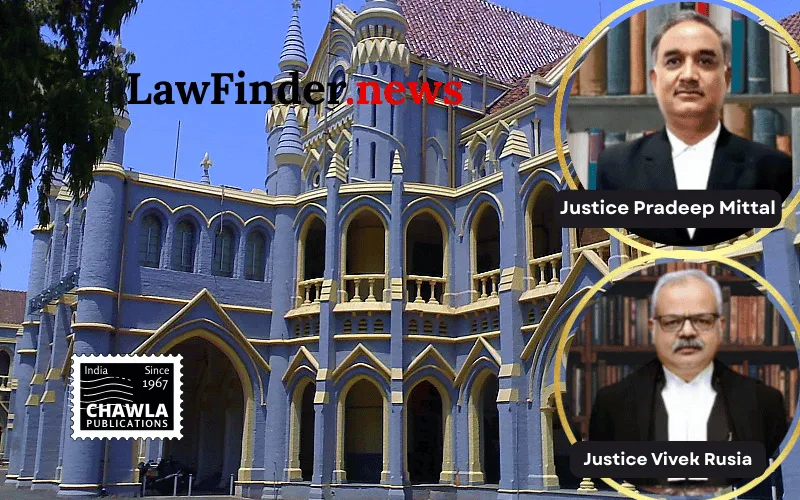
In a significant judgment, the Madhya Pradesh High Court dismissed the petition filed by Akash Tiwari seeking compassionate appointment in Bharat Sanchar Nigam Limited (BSNL) after a lapse of over two decades since his father's death. The Division Bench comprising Justices Vivek Rusia and Pradeep Mittal ruled that the application was not only barred by limitation but also lacked merit as the foundational requirement of immediate financial crisis was absent.
The case involved Akash Tiwari, whose father, an employee of BSNL, passed away in April 2005. Tiwari initially applied for a compassionate appointment shortly after his father's demise, but after years of silence from the authorities, he pursued the matter again in 2016 and 2020. The BSNL High-Powered Committee had earlier rejected his application in 2015, stating that he scored only 39 out of the required 55 points under the Compassionate Appointment Policy of 2007.
The court highlighted that compassionate appointments are not a vested right but an exception to alleviate sudden financial hardships following an employee's death. The judges emphasized that Tiwari's family had survived for more than twenty years without the appointment, and he had completed his engineering education, indicating financial stability. Therefore, the primary objective of compassionate appointments-to address immediate financial distress—was no longer relevant.
The court also addressed the petitioner's contention regarding the applicability of the 1998 Department of Personnel & Training (DOPT) guidelines, asserting that the 2007 BSNL policy did not contradict these foundational principles but provided a structured evaluation framework.
In their decision, the judges acknowledged the importance of adhering to policy guidelines and recognized the narrow scope of judicial review in policy matters, such as the weightage point system. They concluded that the petitioner's claim, pressed after two decades, could not justify intervention given the family's demonstrated capacity to manage without the appointment.
The petition was ultimately dismissed, underscoring the judiciary's consistent stance that compassionate appointments should address urgent financial crises and not be treated as entitlements after extended periods.
Bottom Line:
Compassionate appointments - Held, such appointments are not a vested right but an exception to the general rule of recruitment, meant to alleviate immediate financial crisis resulting from the demise of an employee. Applications made after considerable delay, where the family has already adapted financially, are not entitled to relief.
Statutory provision(s): Article 14, Article 15, Article 226 of the Constitution of India
Akash Tiwari v. Union of India, (Madhya Pradesh)(Jabalpur)(DB) : Law Finder Doc id # 2882229