Court Advises Distributor Involved in Fatal Cold Syrup Case to Pursue Alternative Remedy Through State Government Appeal
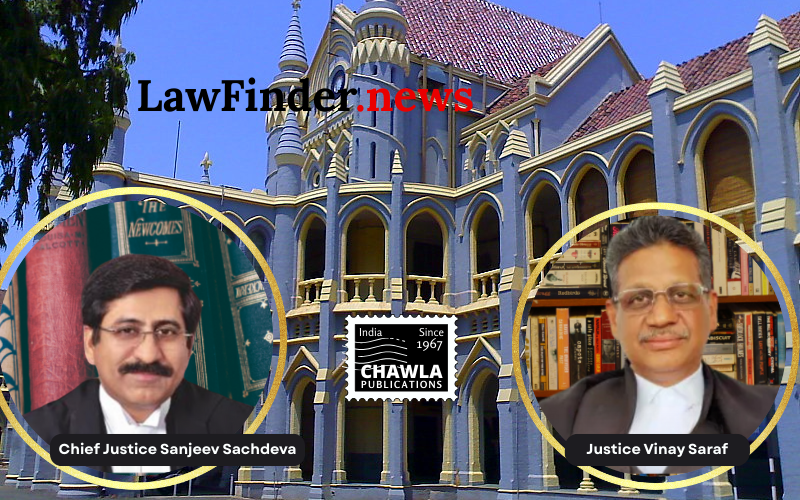
In a significant judgment delivered on November 25, 2025, the Madhya Pradesh High Court, Jabalpur Bench, dismissed a writ appeal filed by Rajpal Kataria, a distributor involved in a high-profile case concerning the alleged distribution of a fatal cold syrup, Coldrif, linked to the deaths of 30 children. The court, led by Chief Justice Sanjeev Sachdeva and Justice Vinay Saraf, emphasized the discretionary nature of writ jurisdiction under Article 226 of the Indian Constitution and highlighted the availability of an alternative and efficacious remedy under the Drug and Cosmetic Rules, 1945.
The appellant, Rajpal Kataria, challenged the sealing of his shop and the suspension and cancellation of his drug license, which were imposed following a raid that uncovered stocks of the controversial cold syrup. The raid, conducted on October 2, 2025, was part of an investigation into the tragic fatalities that occurred between August and October of the same year. Show cause notices were issued to Kataria on October 9 and 11, 2025, demanding explanations for his involvement in the distribution of the medicine.
During the proceedings, the court noted that the appellant had an existing alternative remedy under Rule 66(2) of the Drug and Cosmetic Rules, 1945, which allows for an appeal to the State Government. This provision offers a structured avenue for disputing the actions taken against the appellant, including the suspension and cancellation of his drug license.
The High Court's decision aligns with the precedent that writ jurisdiction should not be exercised when a statutory alternative remedy is available. The court reiterated that the remedy under Article 226 is discretionary and should be invoked only in exceptional circumstances where no other adequate remedy is available.
The judges further stated that if the appellant chooses to file an appeal before the State Government, it would be within the government's purview to thoroughly examine all facts and circumstances surrounding the case to reach a decision.
The judgment underscores the judiciary's stance on prioritizing statutory remedies over discretionary writ petitions, especially in complex cases involving public health and safety. The dismissal of the appeal serves as a reminder of the structured legal frameworks available for addressing grievances and the importance of adhering to prescribed legal channels.
Bottom Line:
Writ jurisdiction under Article 226 of the Constitution of India is discretionary and should not be exercised when an alternative efficacious remedy is available under the applicable laws.
Statutory provision(s): Article 226 of the Constitution of India, Rule 66(2) of the Drug and Cosmetic Rules, 1945