Court Denies Condonation of 581-Day Delay Citing Insufficient Cause and Lack of Due Diligence
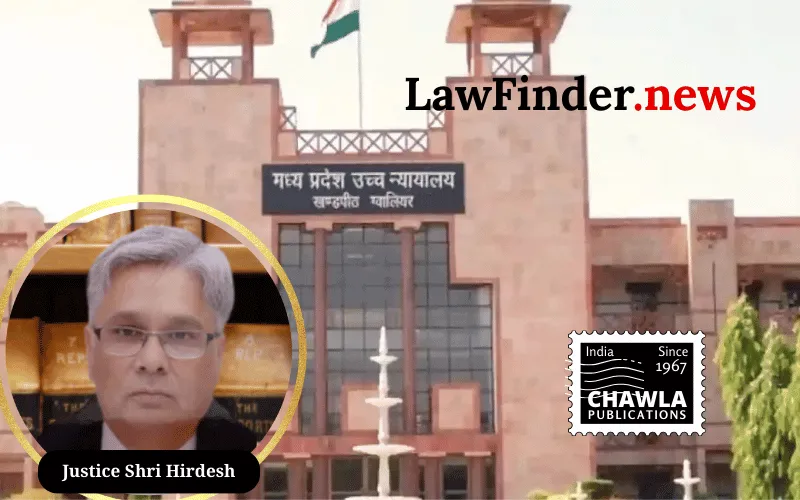
The Madhya Pradesh High Court, Gwalior Bench, in a recent judgment, dismissed a Miscellaneous Appeal filed by Lakhan Kumar Rajak, a driver by profession, against the award passed by the Second Additional Motor Accident Claims Tribunal, Morena. The appeal was dismissed on the grounds of being time-barred due to a substantial delay of 581 days in filing, with the court finding no sufficient cause to condone the delay.
The appellant, Lakhan Kumar Rajak, had sought to challenge an award dated September 1, 2016, from the Claims Tribunal but failed to file the appeal within the prescribed period. He attributed the delay to financial difficulties and alleged negligence by his previous counsel. The appellant argued that his inability to arrange the requisite 50% of the awarded amount for deposit, which was mandatory for filing the appeal, coupled with his counsel's failure to inform him about the outcome of the original case, led to the delay. He cited a Supreme Court judgment in Balwant Singh (dead) v. Jagdish Singh to assert that litigants should not suffer for their counsel's negligence.
However, the respondent, represented by Shri Badri Nath Malhotra, countered that the appellant's reasons were vague and unsubstantiated, emphasizing that the appellant was responsible for being vigilant about his own case.
Upon hearing the arguments and reviewing the submissions, Justice Hirdesh observed that the law of limitation must be applied with due diligence, even in beneficial legislations such as the Motor Vehicles Act. Citing precedents from the Supreme Court, including Esha Bhattacharjee v. Managing Committee of Raghunathpur Nafar Academy and Postmaster General v. Living Media India Ltd., the court reiterated that sufficient cause must be established with bona fide intent and due diligence.
The court concluded that the appellant's explanation was insufficient to account for the entire delay period. The claims of financial hardship and counsel negligence lacked supporting evidence and failed to justify the inordinate delay. Consequently, the application for condonation of delay under Section 5 of the Limitation Act was dismissed, leading to the dismissal of the appeal as barred by limitation.
Bottom Line:
Application for condonation of delay in filing appeal under Section 5 of Limitation Act dismissed due to failure to establish sufficient cause for delay of 581 days. Mere plea of financial difficulty and counsel's negligence without supporting material held insufficient.
Statutory provision(s): Motor Vehicles Act, 1988 Section 173(1), Limitation Act, 1963 Section 5
Lakhan Kumar Rajak v. Smt. Kamlesh Jatav, (Madhya Pradesh)(Gwalior) : Law Finder Doc id # 2876034