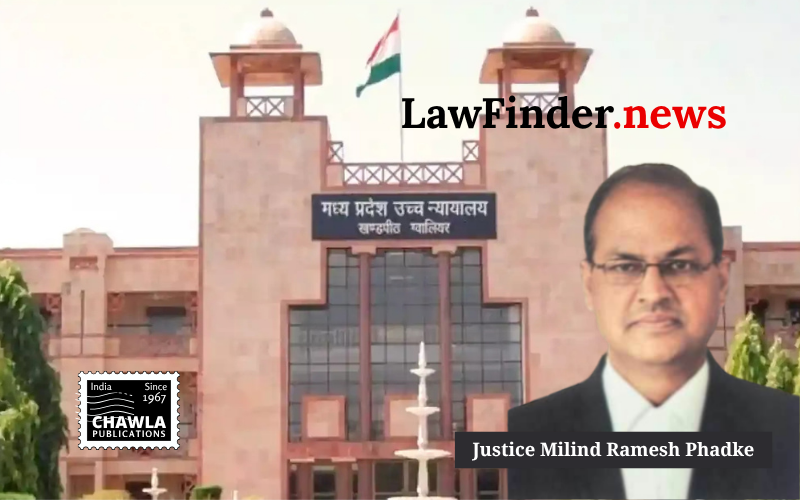
Court affirms FIR's validity; emphasizes limits of free speech under Article 19(1)(a) in sensitive religious contexts.
In a significant ruling, the Madhya Pradesh High Court has dismissed a petition seeking to quash an FIR lodged against Buddha Prakash Bouddha, who allegedly posted content deemed offensive to religious sentiments in a private WhatsApp group. The court underscored that the freedom of speech under Article 19(1)(a) of the Indian Constitution is not absolute and must be balanced with the responsibility to maintain public harmony.
The petition, filed by Bouddha, challenged the FIR registered under the Bharatiya Nagarik Suraksha Sanhita, 2023, citing infringement of his fundamental rights. Bouddha, the administrator of a closed WhatsApp group, had posted a message containing controversial statements about Hindu rituals and practices. The content, according to the complainant, Ram Mohan Tiwari, a local resident, contained derogatory remarks about the Hindu religion and the Brahmin community, causing distress among its members.
Bouddha's counsel argued that the post was an exercise of his right to free speech and derived from scholarly literature, lacking any malicious intent. However, the State's counsel contended that the FIR disclosed the commission of cognizable offences, emphasizing that the preliminary stage of investigation is not the time to assess the sufficiency of evidence or the defense's merits.
Justice Milind Ramesh Phadke, presiding over the case, reiterated the principles set by the Supreme Court regarding the quashing of FIRs. Citing the landmark cases of State of Haryana v. Bhajan Lal and Neeharika Infrastructure Pvt. Ltd. v. State of Maharashtra, the court noted that FIRs should only be quashed in the rarest cases where no offence is disclosed or the allegations are inherently improbable.
The judgment highlighted the importance of conducting a thorough investigation to ascertain the intent and impact of the content shared by Bouddha. The court emphasized that issues like the deliberate intention behind the post, its good faith nature, and its potential to disturb public tranquility are matters for investigation and cannot be resolved at this stage.
The decision underscores the judiciary's cautious approach in balancing individual rights with societal harmony, particularly in cases involving sensitive religious sentiments. The ruling serves as a reminder of the limited scope of judicial intervention at the FIR stage, reinforcing the need for comprehensive investigations in such matters.
Bottom Line:
Freedom of speech and expression under Article 19(1)(a) of the Constitution of India has limitations, and the publication or circulation of material capable of promoting disharmony or outraging religious sentiments may attract cognizable offences. At the FIR stage, courts cannot enter into factual disputes or evaluate sufficiency of evidence.
Statutory provision(s): Bharatiya Nagarik Suraksha Sanhita, 2023 Sections 196(1)(b), 299, 353(1)(c), 353(2); Article 19(1)(a) of the Constitution of India.