Court Directs SNS Minerals to Approach GST Appellate Tribunal, Citing Availability of Statutory Remedy
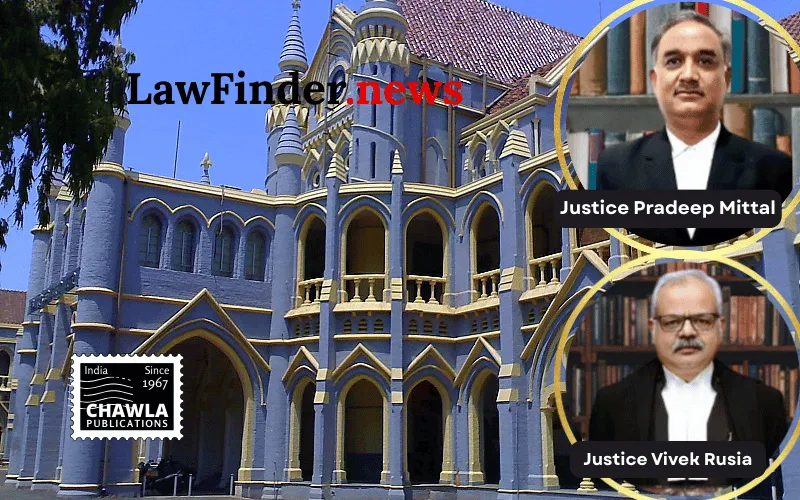
In a significant decision, the Madhya Pradesh High Court has dismissed a writ petition filed by SNS Minerals Private Limited challenging an Order-in-Appeal under the Central Goods and Services Tax (CGST) Act. The division bench, comprising Justices Vivek Rusia and Pradeep Mittal, emphasized the necessity of exhausting statutory remedies before seeking relief under Article 226 of the Constitution of India.
SNS Minerals, a company involved in the mining and supply of limestone, had approached the High Court contesting an appellate order that nullified a previously granted refund of Rs. 84,26,536. The refund was originally sanctioned after the company reversed excess input tax credit accumulated due to differential GST rates on input and output supplies.
During the proceedings, the petitioner's counsel argued that the Order-in-Appeal dated 17.02.2023 was illegal and arbitrary as it effectively overturned a previous appellate order in favor of SNS Minerals that had attained finality. The counsel further contended that the Appellate Authority had become functus officio and had overstepped its jurisdiction by reviewing its own decision indirectly.
On the other hand, the respondents, represented by learned counsel, defended the impugned order, asserting that the refund sanction was legally unsustainable and detrimental to the revenue's interests. They argued that the statutory scheme of the CGST Act allows for reviewing subordinate authority orders and that the appellate proceedings were legitimate and justified.
Upon reviewing the submissions, the High Court underscored the importance of the newly constituted GST Appellate Tribunal as the appropriate forum for such disputes. The court cited several precedents, including the Supreme Court's decision in Whirlpool Corporation v. Registrar of Trade Marks, which outlines conditions under which writ petitions can bypass statutory remedies. However, it found that SNS Minerals did not meet these exceptions, such as a violation of fundamental rights or principles of natural justice, nor was there a question of jurisdiction or legislative vires.
The court concluded that since the GST Appellate Tribunal is now operational, SNS Minerals should pursue its appeal there. It also ordered that the interim relief granted in the writ petition would remain in effect until the Tribunal decides on the stay application.
This judgment reinforces the judicial policy of directing litigants to exhaust statutory remedies before invoking the extraordinary jurisdiction of High Courts. It highlights the judiciary's role in upholding the procedural hierarchy established by legislation, thereby ensuring that specialized tribunals address specific disputes.
Bottom line:-
A writ petition is not maintainable when an effective statutory remedy, such as the GST Appellate Tribunal, is available. High Court jurisdiction under Article 226 of the Constitution is restricted where statutory remedies exist, except in cases of violation of fundamental rights, principles of natural justice, absence of jurisdiction, or challenges to the vires of legislation.
Statutory provision(s): Article 226 of the Constitution of India, Section 54 of the CGST Act, Section 73 of the CGST Act