Court Rules Essential Hindu Marriage Ceremonies Not Performed; Sets Aside Trial Court Judgment
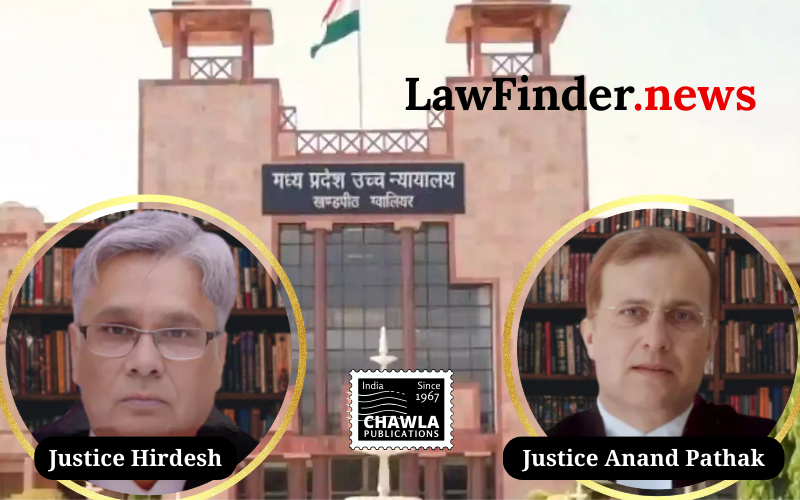
In a significant ruling, the Madhya Pradesh High Court has invalidated a marriage purportedly solemnized through Arya Samaj rituals, between the late Brahmswaroop Sharma and Smt. Kiran Sharma, citing the absence of essential Hindu marriage ceremonies. The Division Bench comprising Justices Anand Pathak and Hirdesh delivered the judgment, emphasizing the necessity of performing requisite rites such as 'Saptapadi' for a valid Hindu marriage under the Hindu Marriage Act, 1955.
The case arose from a first appeal filed by Ashwini Kumar, the legal representative and son of the deceased plaintiff Brahmswaroop Sharma, challenging the judgment of the Family Court, Gwalior, which had dismissed the suit seeking a declaration that the respondent was not the legally wedded wife of the plaintiff and for a permanent injunction against her claiming marital rights.
Brahmswaroop Sharma, a retired Company Commander, had alleged that Kiran Sharma manipulated his loneliness and fabricated a marriage certificate, while concealing her prior marriages. The trial court's judgment, favoring Kiran Sharma, was overturned by the High Court after a detailed examination of evidence and testimonies.
Central to the court's decision was the interpretation of Section 7 of the Hindu Marriage Act, 1955, which mandates the performance of essential ceremonies for a valid Hindu marriage. The court found no evidence of 'Saptapadi' or other customary rites having been performed, as required under Hindu law. The Arya Samaj certificate and marriage register entries were deemed insufficient to confer marital status without proof of these ceremonies.
The court further noted discrepancies in Kiran Sharma's marital history, including her undisputed previous marriage to Aashiq Kalbhor and allegations of a subsisting marriage with Ashok Sharma, which remained unaddressed in the trial court's findings. The High Court underscored the importance of independently verifying the performance of marriage rituals rather than relying solely on certificates.
Citing the Supreme Court's judgment in Dolly Rani v. Manish Kumar Chanchal, the bench emphasized that the mere issuance of a marriage certificate does not equate to a valid marriage. The absence of critical ceremonies invalidated the purported marriage, leading to the declaration that Kiran Sharma was not the legally wedded wife of Brahmswaroop Sharma.
The court's ruling included a permanent injunction preventing Kiran Sharma from asserting marital claims against the plaintiff's estate, represented by his legal heir, Ashwini Kumar. This judgment underscores the judiciary's commitment to uphold traditional marriage laws while ensuring justice in cases of alleged fraudulent marriages.
Bottom Line:
Hindu Marriage - Validity of marriage under Section 7 of the Hindu Marriage Act, 1955 - Mere issuance of Arya Samaj marriage certificate without proof of essential ceremonies, including Saptapadi, does not establish a valid Hindu marriage.
Statutory provision(s): Hindu Marriage Act, 1955 Section 7, Hindu Marriage Act, 1955 Section 5, Family Courts Act, 1984 Section 19