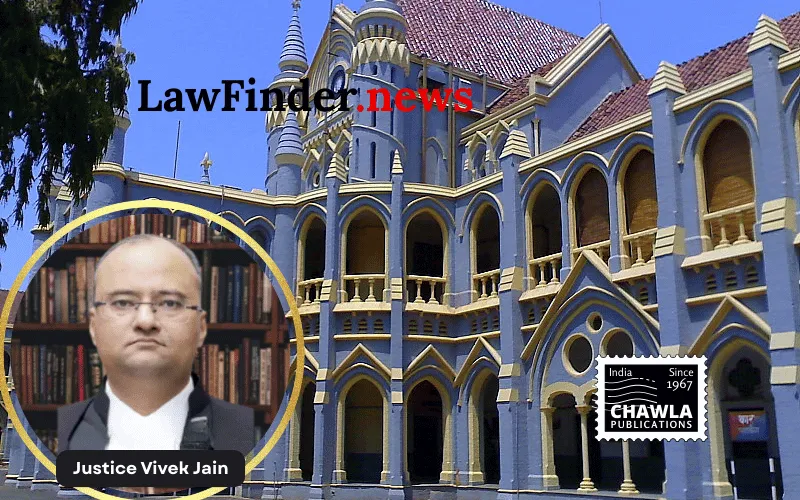
Court Upholds Escalation Charges but Rejects Overburden Removal Claims as Time-Barred
In a significant ruling, the Madhya Pradesh High Court, presided over by Justice Vivek Jain, has partially set aside an arbitration award in the dispute between Northern Coal Field Ltd. (NCL) and M/s Suresh Construction Co. The case revolved around multiple claims arising from a construction contract for a haul road at the Dudhichua Project.
The court upheld the arbitrator's award granting escalation charges but rejected the claims for overburden removal charges and related interest, deeming them barred by the statute of limitations. The dispute initially arose when NCL repudiated the contractor's claim for overburden removal charges in December 1995. Despite repeated representations from the contractor, the court determined that the limitation period began on the date of repudiation and not from the notice of arbitration issued years later.
Justice Jain emphasized that the interpretation of the limitation period by the arbitrator was contrary to Indian public policy, citing established precedents such as Major Inder Singh Rekhi v. Delhi Development Authority, where the Supreme Court elucidated the commencement of disputes upon claim repudiation.
Furthermore, the court upheld the arbitrator's decision regarding escalation charges based on the actual completion date of the project, aligning with the contractual terms. On the issue of interest, the court found no fault in the arbitrator's decision to award interest post-award, despite a contractual clause barring interest on withheld amounts. The court clarified that this clause did not apply as the amounts were not withheld due to defect liability.
However, the court rejected the contractor’s claim for amounts withheld due to non-furnishing of a Royalty Clearance Certificate. Referring to the precedent set by a larger bench in Pankaj Kumar Rai v. State of M.P., the court affirmed the legality of requiring such certificates to ensure royalty-paid materials in construction.
This ruling highlights the complexities of arbitration in construction disputes and reinforces the importance of adherence to statutory limitations and contractual terms. The judgment underscores the judiciary's role in ensuring arbitration awards align with public policy and legal standards.
Bottom line:-
Arbitration proceedings - Claims barred by limitation cannot be entertained. Arbitrator's interpretation of limitation contrary to public policy of India. Escalation charges to be determined based on actual completion date if extension of time granted. Interest can be awarded unless specifically barred under the contract.
Statutory provision(s): Arbitration and Conciliation Act, 1996 Sections 34, 37, 28; Contract Law; Case Law: Major Inder Singh Rekhi v. Delhi Development Authority (1988), ONGC v. Saw Pipes (2003), Steel Authority of India Ltd. v. J.C. Budharaja (1999), Pankaj Kumar Rai v. State of M.P. (2017)