Court Orders Reinstatement and Criticizes Lack of Departmental Inquiry in Termination Process
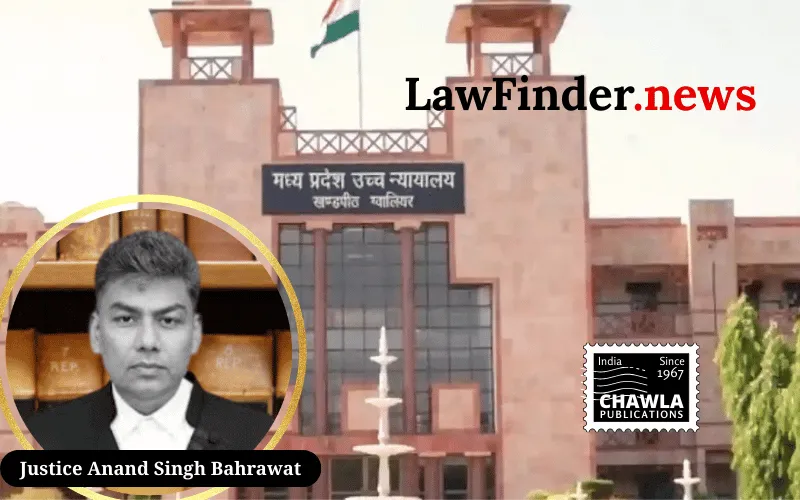
In a significant ruling, the Madhya Pradesh High Court at Gwalior has quashed the termination of Manoj Singh Raghuwanshi, a former Additional Government Pleader, criticizing the state for not conducting a regular departmental inquiry. The decision, delivered by Justice Anand Singh Bahrawat, emphasizes the necessity for due process and adherence to principles of natural justice, particularly when issuing stigmatic termination orders.
The petitioner, Manoj Singh Raghuwanshi, was serving as an Additional Government Pleader in the District Court of Shivpuri. His termination stemmed from an inquiry into the alleged withholding of eyewitnesses in a Sessions Trial, which was later dismissed as an oversight by Raghuwanshi. Despite providing a detailed reply to a show-cause notice, Raghuwanshi was terminated based on a fact-finding report without being given an opportunity to be heard or cross-examine witnesses.
The court ruled that the termination order was stigmatic, non-speaking, and unreasoned, which violates the principles of natural justice. Justice Bahrawat highlighted that any termination order with stigmatic consequences requires a regular departmental inquiry, including adequate opportunity for the employee to defend themselves. The court also underscored the importance of reasoned decisions in administrative actions to ensure fairness and accountability.
The High Court ordered the reinstatement of Raghuwanshi and provided the state with the liberty to conduct proceedings against him in accordance with the law, if necessary. The judgment reaffirms the judicial stance on the necessity of procedural fairness and transparency in administrative decisions affecting employment.
Bottom line:-
Termination of services of a government pleader without conducting a regular departmental inquiry is illegal when the termination order is stigmatic, non-speaking, and unreasoned.
Statutory provision(s): Article 226 of the Constitution of India, Indian Penal Code Sections 147, 148, 149, 302.