Court Directs Authorities to Consider Widow's Application According to Policy, Without Delays
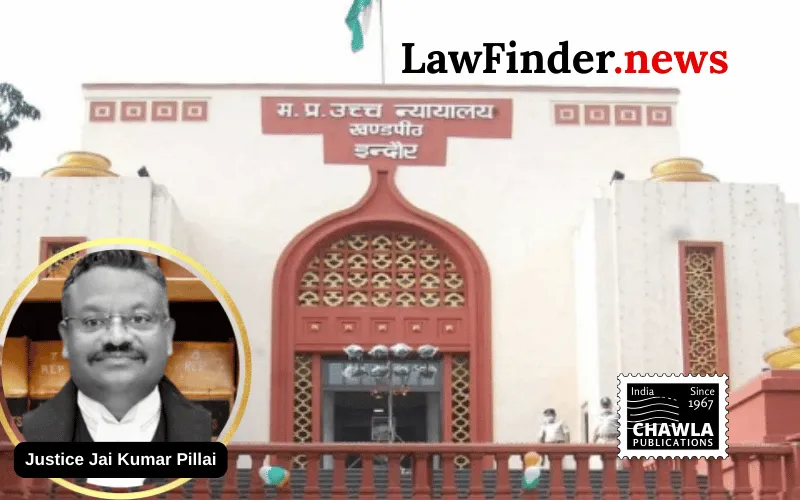
In a significant judgment, the Madhya Pradesh High Court has quashed an order requiring a succession certificate for a compassionate appointment, reinforcing the rights of a deceased employee's wife under the compassionate appointment policy. The ruling, delivered by Justice Jai Kumar Pillai in Indore, addresses the grievances of Smt. Manisha, the widow of late Shri Jitendra Solanki, who was denied compassionate appointment due to administrative insistence on a succession certificate.
The court found the demand for a succession certificate to be arbitrary and contrary to the established compassionate appointment policy. The judgment clarifies that the wife of a deceased government servant holds the first and highest priority for such appointments, negating any competing claims from other relatives, such as siblings, unless the deceased was unmarried.
The case arose after Smt. Manisha applied for a compassionate appointment following her husband's death in service. Her application faced delays due to a competing claim from the deceased's younger brother, leading the respondent authorities to request a succession certificate to resolve the matter. This requirement, the court observed, was not supported by the policy, which clearly prioritizes the spouse of the deceased.
Justice Pillai emphasized that the policy does not acknowledge the brother of a married deceased employee as an eligible dependent, and the insistence on a succession certificate was misplaced. The judgment directs the administrative authorities to expedite the consideration of Smt. Manisha's application strictly as per the policy, without any extraneous procedural demands that could defeat the policy's objective.
The court also addressed the issue of alternative remedies, asserting that the writ jurisdiction is appropriate in cases of arbitrary exercise of administrative power and policy violations. The ruling is expected to streamline the process for compassionate appointments, ensuring that eligible dependents receive timely support without unwarranted procedural hurdles.
The authorities have been instructed to comply with the court's decision within 60 days, providing relief to the petitioner and setting a precedent for similar cases where administrative requirements may unjustly delay appointments under compassionate grounds.
Bottom Line:
Compassionate appointment - Wife of deceased employee has the first and highest priority under the compassionate appointment policy, and insistence on a succession certificate in such cases is arbitrary and contrary to the policy when there is no dispute regarding her status as the legally wedded wife.
Statutory provision(s): Article 226 of the Constitution of India, Clause 2.1 and Clause 2.6 of the Compassionate Appointment Policy, Section 59 of the Madhya Pradesh Krishi Upaj Mandi Adhiniyam, 1972