Migrants Cannot Avail Scheduled Caste Benefits Outside Their Home State, Rules Court
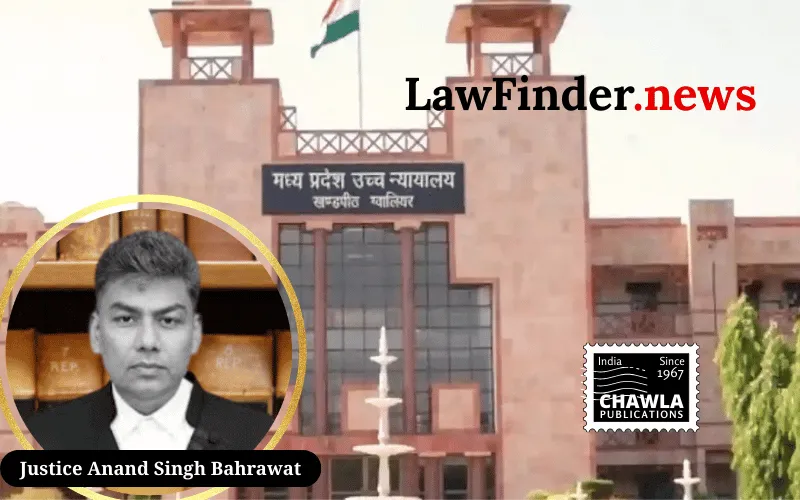
In a significant ruling, the Madhya Pradesh High Court has reaffirmed the principle that reservation benefits for Scheduled Castes are state-specific and cannot be extended to individuals migrating from one state to another. The judgment was delivered by Justice Anand Singh Bahrawat in the case involving Smt. Hemlata Arya, who had petitioned against an order concerning her appointment as an Anganwadi Worker.
Smt. Hemlata Arya, originally from Rajasthan, had contended that her Scheduled Caste status should be recognized in Madhya Pradesh, where she had applied for a position as an Anganwadi Worker. Her application was initially successful after an appeal, but was subsequently challenged and overturned by the Additional Commissioner, Chambal Division, Morena.
The court clarified that while the caste may be recognized as Scheduled Caste in both Rajasthan and Madhya Pradesh, reservation benefits are inherently linked to the social, economic, and educational backwardness specific to the individual's home state. The court cited previous judgments, including those by the Supreme Court, emphasizing that Scheduled Caste status does not carry over upon migration to another state.
In its decision, the court upheld the order for a fresh appointment process for the Anganwadi Worker position in compliance with legal requirements and emphasized the necessity of personal hearings for all affected candidates. It directed respondent No. 4 to reassess the merits of all applicants without extending Scheduled Caste benefits to Smt. Hemlata Arya under the Madhya Pradesh category.
The judgment aligns with the constitutional provisions under Articles 341 and 342, which specify that the benefits of reservation are confined to the geographical territories where the caste is notified by Presidential Orders. The decision reflects the judiciary's commitment to maintaining the integrity of state-specific reservation policies, preventing any dilution of benefits through interstate migration.
Bottom line:-
A person cannot claim the benefit of reservation in a State other than their home State, even if the caste is recognized as Scheduled Caste (SC) in both States. Reservation benefits are directly related to the social, economic, and educational backwardness specific to the home State.
Statutory provision(s):
Article 341, Article 342, Article 226 of the Constitution of India