Division Bench Upholds Decisions of Expert Committee in Exam Question Controversies; Reiterates Limited Role of Judicial Review
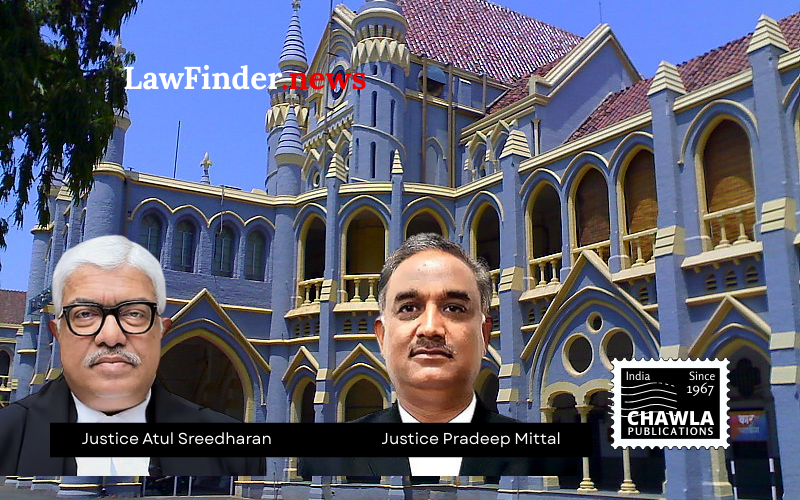
In a significant judgment, the Madhya Pradesh High Court's Division Bench, comprising Justices Atul Sreedharan and Pradeep Mittal, overturned a previous ruling by a Single Bench regarding disputed questions in the Madhya Pradesh Public Service Commission's State Service Preliminary Examination, 2023. The appeals filed by the Madhya Pradesh Public Service Commission (MPPSC) challenged the Single Bench's directive to exclude certain questions and alter the correct answers, impacting the results of the examination.
The controversy stemmed from two specific questions: Question No. 63, concerning the location of the headquarters of the Amateur Kabaddi Federation of India, and Question No. 7, pertaining to the freedom of the press. The Single Bench had ruled in favor of respondents, directing the MPPSC to treat "Jaipur" as the correct answer for Question No. 63, and exclude Question No. 7 from evaluation due to historical inaccuracies.
The Division Bench, however, highlighted the principle that courts should not substitute their judgment for that of expert committees unless errors are glaringly basic or involve notorious facts. Justice Sreedharan emphasized, "The courts are not to take the place of experts, and neither should they, in such cases, appoint experts and instead the same must be left to the expertise of the academicians."
The judgment clarified that the headquarters of the Amateur Kabaddi Federation of India was correctly located in Delhi, as per the expert committee's conclusion. This decision was based on the memorandum of association of the Federation, stating that the headquarters is where the President or appointed Administrator resides. The Administrator, appointed by the Delhi High Court, was functioning from Delhi in the absence of an elected President.
Regarding the freedom of the press question, the Division Bench acknowledged the expert committee's reliance on authoritative texts, attributing initial steps to liberate the press to William Bentick in 1835, while Charles Metcalfe formalized it through legislation. The court upheld the committee's decision, noting that the question aimed to assess the year when Bentick initiated the press freedom, not the legislative act by Metcalfe.
This judgment reinforces the limited role of judicial review in examination-related disputes, underscoring the need for deference to expert committees' opinions unless errors are glaringly obvious. The court's decision to set aside the Single Bench's judgment aims to restore the integrity of the examination process conducted by the MPPSC.
Bottom Line:
Courts should not substitute their judgment for that of expert committees in matters of examinations unless errors are glaringly basic or involve notorious facts discernible without a roving inquiry.
Statutory provision(s): Article 226 of the Constitution of India (Judicial Review), Ran Vijay Singh v. State of Uttar Pradesh [(2018) 2 SCC 357], Uttar Pradesh Public Service Commission v. Rahul Singh [(2018) 7 SCC 254]