Court Quashes State's Decision to Deny 6th Pay Commission Benefits to Panchayat Staff, Orders Refund of Recovered Amounts
In a landmark ruling, the Madhya Pradesh High Court has reaffirmed the principle of "Equal Pay for Equal Work," extending it to employees of Gram Panchayats, Janpad Panchayats, and Jila Panchayats. The decision came in response to a writ appeal filed by the State of Madhya Pradesh against the order of a single judge which favored the Panchayat employees.
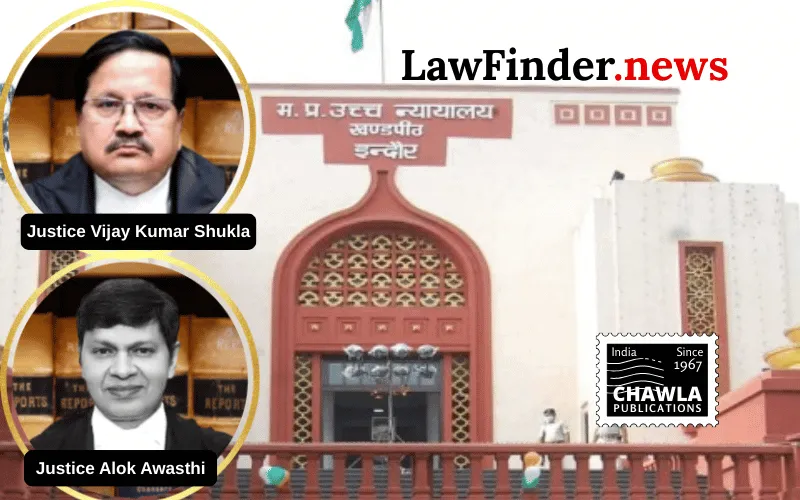
The division bench comprising Justices Vijay Kumar Shukla and Alok Awasthi dismissed the State's appeal, which sought to uphold the withdrawal of 6th Pay Commission benefits from Panchayat employees. The court declared the State's action as arbitrary, discriminatory, and violative of the constitutional principle of "Equal Pay for Equal Work."
The case revolved around the State Government's decision to implement the 6th Pay Commission recommendations for Panchayat employees from April 1, 2013, as opposed to January 1, 2006, for State Government employees. This discrepancy was challenged by the Panchayat employees, leading to the initial writ petition.
The High Court emphasized that Panchayat employees, who perform similar duties to those of State Government employees, are entitled to equivalent pay scales. The court rejected the State's argument that Panchayats are independent entities and not bound to provide the same benefits as the State Government.
Citing precedents from the Supreme Court, including the cases of Randhir Singh v. Union of India and State of Punjab v. Jagjit Singh, the court reiterated that the doctrine of "Equal Pay for Equal Work" applies across all employment categories, irrespective of the nature of the employment, whether permanent or temporary.
Moreover, the court ordered that any amounts recovered from the Panchayat employees as a result of the pay scale withdrawal be refunded with 6% interest. The bench pointed out that the recovery was made without any fault or misrepresentation on the part of the employees, making it unjustifiable.
This judgment reinforces the legal obligation to ensure pay parity among employees discharging similar duties, regardless of the administrative body they serve under. It sets a precedent for equitable treatment of Panchayat employees in line with their counterparts in the State Government.
Bottom Line:
Principle of "Equal Pay for Equal Work" applied to the employees of Panchayats. Arbitrary and discriminatory denial of pay revision benefits based on different dates for implementation is invalid.
Statutory provision(s): Articles 309 and 243 of the Constitution of India, Principle of "Equal Pay for Equal Work"