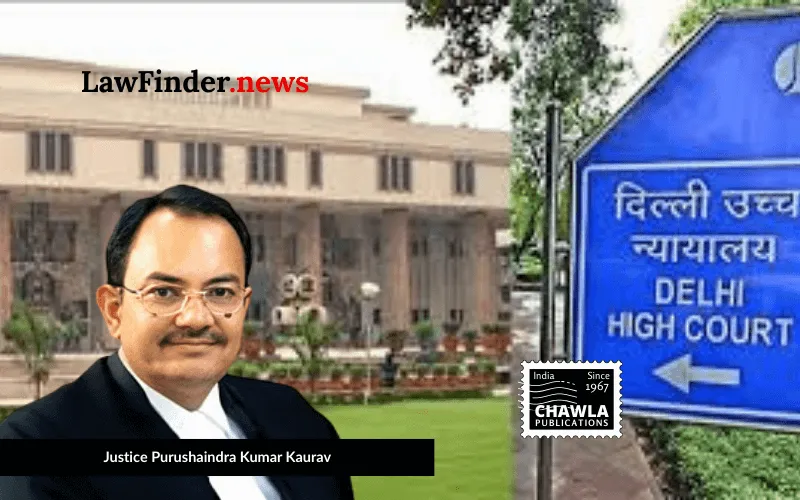
Landmark Judgment Reinforces Constitutional Safeguard Against Being Tried Twice for the Same Offense
In a significant ruling, the Madhya Pradesh High Court has upheld the constitutional protection against double jeopardy, reinforcing the legal principle that prevents an individual from being tried twice for the same offense. The judgment, delivered by Justice Subodh Abhyankar, involved the case of Harsh versus the State of Madhya Pradesh, wherein the petitioner, Harsh, sought relief from being tried again for offenses for which he had already faced trial and conviction in Vadodara.
The petitioner Harsh was previously tried and acquitted of some charges but convicted under sections 419 and 420 of the Indian Penal Code by the Judicial Magistrate First Class in Vadodara, Gujarat. Subsequently, a similar trial was initiated in Dhar, Madhya Pradesh, for the same offenses, prompting Harsh to file a petition under Section 300(1) of the Criminal Procedure Code and Article 20(2) of the Constitution of India, invoking the doctrine of double jeopardy.
The case stemmed from a complaint filed by the State Bank of Indore, which discovered fraudulent bank drafts purportedly issued by their Vadodara branch. Harsh and others were implicated in the case after investigations revealed that similar drafts had been cleared previously, leading to financial disbursements in favor of Anoop Udyog.
Despite the delay in filing the application invoking double jeopardy, the High Court ruled that the protection under Section 300(1) of the Cr.P.C. and Article 20(2) of the Constitution is a fundamental right that cannot be denied due to procedural delays. Justice Abhyankar emphasized that such rights are exercisable at any stage of trial proceedings, underscoring their constitutional significance.
The court drew parallels between the bank drafts involved in the Vadodara and Dhar cases, noting that the subject matter of both trials was essentially the same. Justice Abhyankar stated that while an additional draft was included in the Vadodara case, it did not alter the nature of the offense, thus affirming the applicability of the double jeopardy doctrine.
The judgment referenced precedents from the Supreme Court, including cases like Kola Veera Raghav Rao v. Gorantla Venkateshwara Rao and Sangeetaben Mahendrabhai Patel v. State of Gujarat, which bolstered the petitioner's arguments.
Counsel for the State opposed the petition, citing delays and arguing that the trial court should proceed with the case. However, the High Court quashed the proceedings in the Dhar court, setting aside the impugned order and allowing the petition, thereby reinforcing the constitutional safeguard against double jeopardy.
Bottom line:-
Doctrine of double jeopardy under Section 300(1) of Cr.P.C. and Article 20(2) of the Constitution is a legal and constitutional protection, and any plea invoking it cannot be rejected on the grounds of delay or requirement of evidence.
Statutory provision(s): Article 20(2) of the Constitution of India, Section 300(1) of the Criminal Procedure Code, 1973
Harsh v. State of Madhya Pradesh, (Madhya Pradesh)(Indore) : Law Finder Doc id # 2893912