Court Reaffirms Public Prosecutor's Primacy in Conducting Prosecution, Dismisses Petitioner's Plea for Greater Involvement
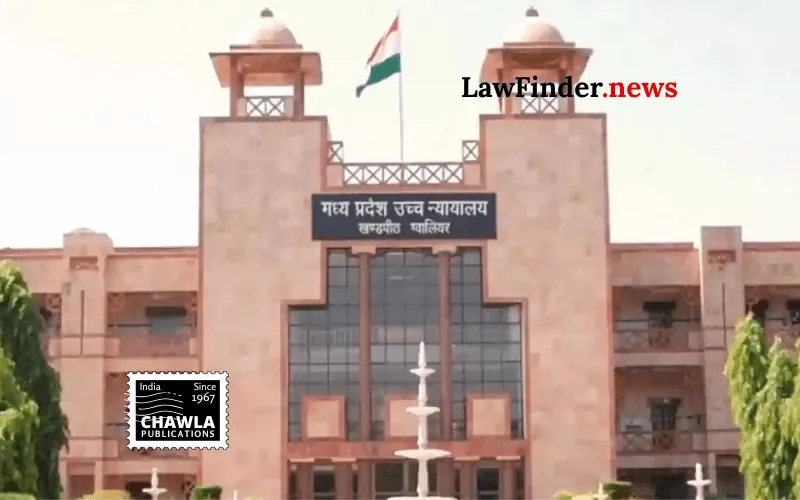
In a significant ruling, the Madhya Pradesh High Court, Gwalior Bench, has reinforced the principle that the role of private individuals in sessions trials is largely restricted, with the Public Prosecutor maintaining the primary responsibility for conducting prosecutions. The judgment was delivered in the case titled "Vijay Sharma v. State of Madhya Pradesh," where the petitioner, Vijay Sharma, sought greater involvement in the prosecution process, arguing his status as a complainant in a corruption case involving misuse of municipal funds.
The Division Bench comprising Justices G.S. Ahluwalia and Pushpendra Yadav dismissed the criminal revision petition filed by Vijay Sharma, who was challenging an order from the Special Court (Prevention of Corruption Act), Shivpuri. The Special Court had previously rejected Sharma's application seeking permission to assist the prosecution under Section 338(2) of the Bharatiya Nagarik Suraksha Sanhita, 2023 (BNSS).
The case stems from allegations of corruption and misuse of public funds by municipal officers and contractors, which were initially brought to light by Sharma and other elected councilors of the Municipal Council, Shivpuri. Following an inquiry initiated by their representation, an FIR was registered, leading to the current legal proceedings.
The petitioner's counsel argued for his active involvement in the prosecution on the grounds that he was the original complainant and represented the interests of Shivpuri's residents. However, the court clarified that under Sections 248 and 338 of BNSS, the prosecution in a sessions trial is to be conducted by the Public Prosecutor. The counsel for a private individual may only submit written arguments with the court's permission, and only after the evidence has been closed, without the ability to make oral arguments or cross-examine witnesses.
The High Court cited precedents from the Supreme Court, including Rekha Murarka v. The State of West Bengal and other cases, emphasizing that the text of BNSS and corresponding provisions of the CrPC do not grant a broad mandate to private individuals or victim's counsel to participate extensively in the prosecution.
The judgment underscores the statutory limits placed on private individuals in the prosecution process, reaffirming the Public Prosecutor's central role in ensuring justice is served in criminal proceedings. This decision is seen as a reinforcement of procedural integrity within the judicial system, ensuring that prosecutions are conducted without external influence beyond statutory confines.
The court also noted that the judgments cited by the petitioner pertained to bail matters and were not applicable to the present case. Consequently, the revision petition was dismissed, marking a clear delineation of roles within the judicial process.
Bottom line:-
Bharatiya Nagarik Suraksha Sanhita, 2023 - Private individual's role in prosecution during sessions trial is limited to submitting written arguments under the instructions of Public Prosecutor and with Court's permission after the evidence is closed.
Statutory provision(s): Bharatiya Nagarik Suraksha Sanhita, 2023 Sections 248, 338(2)
Vijay Sharma v. State of Madhya Pradesh, (Madhya Pradesh)(DB)(Gwalior) : Law Finder Doc id # 2896169