Executive directives mandating seniority-based appointments declared unconstitutional under Article 30(1).
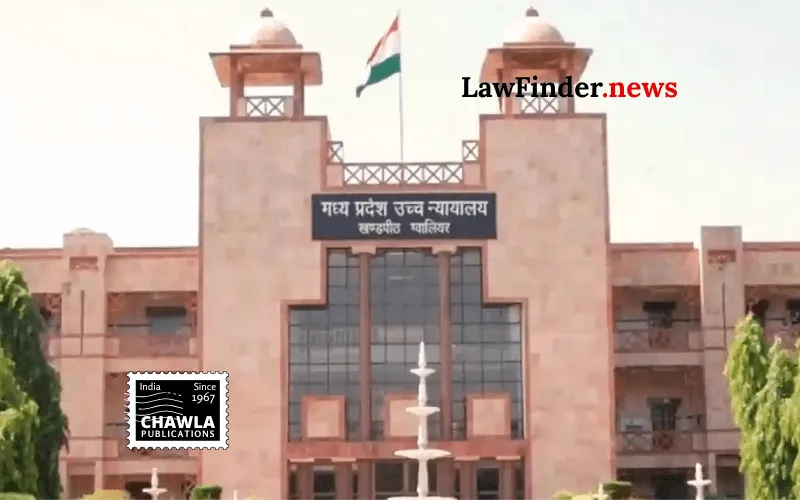
In a landmark ruling, the Madhya Pradesh High Court has reinforced the autonomy of minority educational institutions to appoint Principals or Headmasters of their choice, striking down executive instructions that imposed seniority-based criteria for such appointments. The court declared that such directives violate Article 30(1) of the Indian Constitution, which guarantees minority communities the right to establish and administer educational institutions of their choice.
The judgment was delivered by a Division Bench comprising Justices Anand Pathak and Anand Singh Bahrawat, in a writ appeal filed by the Chairman of S.S.L. Jain P.G. College, Vidisha. The appeal challenged the previous order that directed the reconsideration of an appointment based on seniority, following recommendations by the Regional Additional Director, Higher Education Department.
The case originated from a dispute over the appointment of Dr. Archana Jain as the In-charge Principal, based on her seniority. Despite her seniority, the Governing Body had resolved to appoint Dr. S.K. Upadhyay, citing past allegations against Dr. Jain. This decision was contested in a writ petition that led to the challenged order by the Single Bench.
The High Court's decision emphasized the constitutional right of minority institutions to appoint leaders without interference from executive circulars that dictate criteria such as seniority. The court referenced several Supreme Court precedents, including Malankara Syrian Catholic College v. T. Jose and T.M.A. Pai Foundation v. State of Karnataka, which have consistently upheld the rights of minority institutions to make autonomous choices in appointments.
The judgment noted that the role of a Principal is pivotal to the functioning and ethos of an educational institution, and the right to choose a Principal is a critical aspect of the administrative rights of minority institutions under Article 30(1). The court clarified that executive instructions cannot abridge or dilute this constitutional right, even if the institution receives state aid.
By setting aside the Single Bench's order, the High Court upheld the minority institution's choice of Dr. S.K. Upadhyay as the Principal, reaffirming its autonomy in making such appointments. This decision is expected to have significant implications for the governance of minority educational institutions across the country, safeguarding their right to self-administration as envisaged under the Constitution.
Bottom line:-
Minority educational institutions have the absolute right under Article 30(1) of the Constitution of India to appoint a Principal or Headmaster of their choice, even if they are aided institutions. Any restriction imposed by executive instructions or circulars requiring appointment based on seniority violates this constitutional right.
Statutory Provision(s): Article 30(1) of the Constitution of India
Chairman v. State Of Madhya Pradesh, (Madhya Pradesh)(DB)(Gwalior) : Law Finder Doc id # 2891542