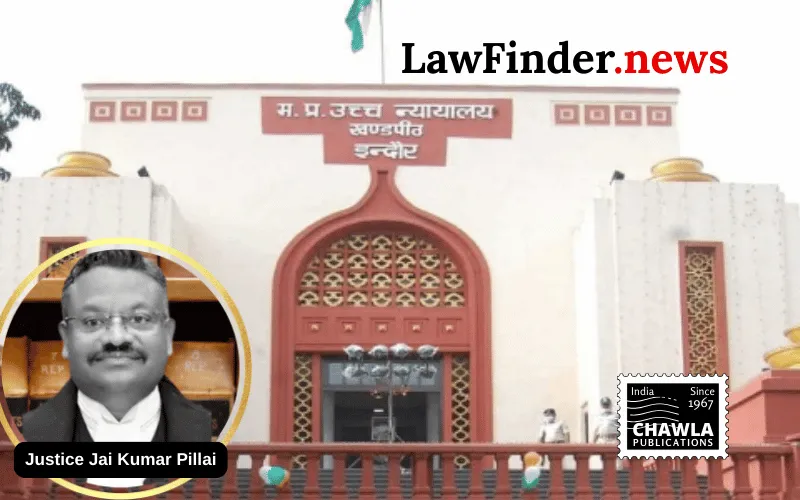
Court Quashes Denial of Reservation Benefits for Candidates Married into Madhya Pradesh, Citing Absence of Rule Mandating State-Issued Caste Certificates
In a significant judgment, the Madhya Pradesh High Court, Indore Bench, has ruled in favor of petitioners who were denied reservation benefits due to caste certificates issued by states other than Madhya Pradesh. The case, titled "Anusuiya Prajapati v. State of Madhya Pradesh," involved multiple writ petitions challenging the rejection of candidates' applications for teaching positions on the grounds of non-submission of caste certificates issued by the State of Madhya Pradesh.
The court, presided over by Judge Jai Kumar Pillai, found that the Madhya Pradesh School Education Service (Teaching Cadre) Service Conditions and Recruitment Rules, 2018, do not contain any specific requirement that candidates must submit caste certificates exclusively from Madhya Pradesh. It was observed that candidates married into the state and holding valid caste certificates from another state should not be denied eligibility for reservation benefits if their caste is recognized as a reserved category in both states.
The court emphasized that the denial of reservation benefits based solely on the origin of the caste certificate was arbitrary and unsustainable. The judgment referenced prior rulings, including "Dr. Alka Singh v. State of M.P." and "Bedanga Talukdar v. Saifudaullah Khan," which underscore the principles of fairness and non-arbitrariness in recruitment processes.
The court ordered the respondents to verify if the petitioners' caste or community is recognized as a reserved category in both states. If so, the petitioners are to be considered eligible for reservation benefits, and the authorities are directed to proceed with their appointments, granting them appropriate seniority, notional pay fixation, and other consequential benefits.
The decision reinforces the doctrine that rules of recruitment cannot be altered mid-process and highlights the need for a liberal and purposive interpretation of reservation policies to advance their objectives.
Bottom Line:
Reservation benefits in public employment - Candidates married into the State of Madhya Pradesh and holding caste certificates from another State cannot be denied eligibility for reservation benefits, provided the caste is recognized as a reserved category in both States and there is no express stipulation in the recruitment rules requiring caste certificates to be issued exclusively by the State of Madhya Pradesh.
Statutory provision(s): Madhya Pradesh School Education Service (Teaching Cadre) Service Conditions and Recruitment Rules, 2018; Article 14, Article 16 of the Constitution of India.