Court Orders Expedited Eviction and Recovery of Encroached Temple Lands Amidst Political Resistance
In a landmark ruling, the Madras High Court has strongly condemned the continued encroachment on temple lands in Tamil Nadu, highlighting the systemic issues and administrative inertia that have plagued the recovery process. The case, titled A. Radhakrishnan v. P. Madhusudhanreddy, I.A.S., and Others, underscores the court's discontent with the failure of officials to comply with judicial directions issued nearly six years ago for the recovery of lands belonging to the Arulmighu Balasubramaniyaswami Temple in Karur District.
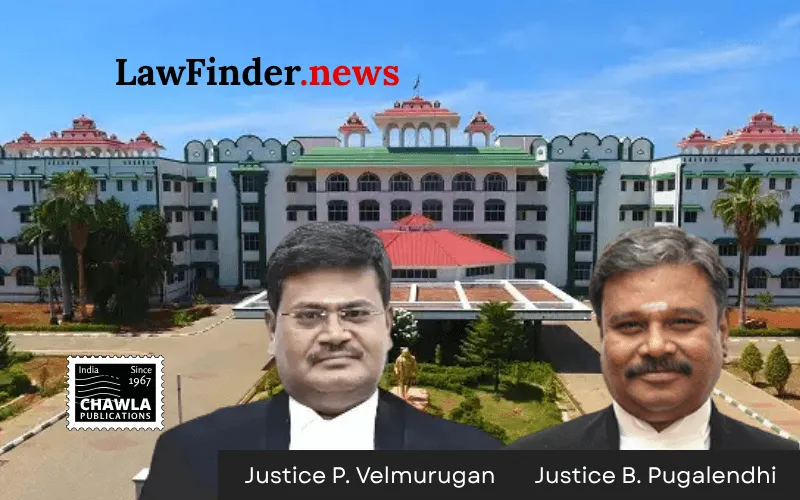
The court found several government officials in wilful contempt for not executing the orders to reclaim encroached temple properties. It emphasized that judicial orders must be adhered to irrespective of public resistance or political pressures. The bench, consisting of Justices P. Velmurugan and B. Pugalendhi, reiterated the sacred nature of temple lands, which are not mere commercial assets but sacred endowments meant to sustain religious worship and charitable services.
Despite the court's clear and time-bound directives issued in 2019, significant delays have persisted, with only 93.64 acres of the 507.88 acres under encroachment being recovered. The court noted that the delay was compounded by organized resistance from political leaders and influential individuals, some of whom are legal professionals.
In its judgment, the court highlighted the lack of action even after the dismissal of review applications and special leave petitions by the Supreme Court, pointing to a deliberate disobedience of the court's mandate. It deplored the lawlessness observed in the district, with encroachers and their supporters obstructing eviction attempts and even resorting to self-immolation threats and blocking national highways.
The bench decided against imposing punishment on individual officers, focusing instead on the larger goal of restoring the temple's property. It directed civil courts to expedite the disposal of related suits and ordered the HR and CE Department to submit quarterly status reports. The Superintendent of Police, Karur, was instructed to provide adequate protection for officials executing the eviction orders.
Moreover, the court ordered an inquiry into the activities of organizations mobilizing protests against the eviction process, emphasizing that the rule of law must prevail over political and organized resistance.
The judgment serves as a stern reminder that compliance with judicial orders is mandatory, and the state's machinery is expected to uphold constitutional principles without yielding to electoral or political influences.
Bottom Line:
The court addressed the issue of temple land encroachments in Tamil Nadu, highlighting the systemic erosion of temple properties and mandating strict compliance with judicial directions for eviction and recovery of encroached lands.
Statutory provision(s): Hindu Religious and Charitable Endowments Act, 1959 Section 78