Court Finds Waqf Board's Composition Violates Unified Waqf Management Act Provisions
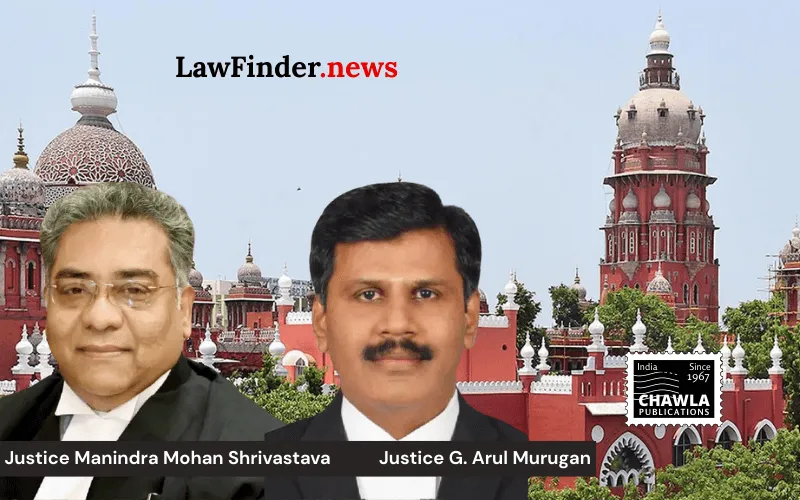
In a significant ruling, the Madras High Court has restrained the Waqf Board from exercising its powers due to non-compliance with the statutory composition requirements as per Section 14 of the Unified Waqf Management, Empowerment, Efficiency and Development Act, 1995. The judgment was delivered by a division bench comprising Chief Justice Manindra Mohan Shrivastava and Justice G. Arul Murugan.
The case, titled "Y. Shoukath Ali Mohamed v. State of Tamil Nadu," challenged the constitution of the Tamil Nadu Waqf Board on the grounds of incomplete nominations. The petitioner argued that the Board was not duly constituted as it failed to fulfill the nomination mandates under Clauses (d) and (f) of Section 14. Specifically, the Board was short of one professional member in business management, social work, finance, or agriculture, and lacked a member from the Bar Council. Additionally, the requirement for appointing two non-Muslim members was not met.
The court noted that the second proviso of Section 14, which mandates the inclusion of two non-Muslim members among the total members, was not adhered to. The court emphasized that the constitution of the Board, as it stood, was prima facie not in accordance with the law.
The Advocate General argued that the Board's composition was almost complete, with efforts underway to fulfill the remaining positions. However, the court found this insufficient, particularly highlighting the Supreme Court's interim observations in "In Re. The Wakf Amendment Act, 2025," which stressed the limitations on non-Muslim membership in Waqf Boards.
In its order, the High Court declared that the Waqf Board could not exercise any powers or functions under the Act until the composition was rectified. The Board has been restrained from operating until compliance is ensured. The court has scheduled the next hearing for January 19, 2026, allowing the respondents time to file a reply and possibly apply for vacating the stay.
Bottom Line:
Constitution of the Waqf Board must comply strictly with the provisions of Section 14 of the Unified Waqf Management, Empowerment, Efficiency and Development Act, 1995. Board restrained from exercising powers when its constitution is incomplete or not in accordance with the law.
Statutory provision(s): Unified Waqf Management, Empowerment, Efficiency and Development Act, 1995, Section 14
Y. Shoukath Ali Mohamed v. State of Tamil Nadu, (Madras)(DB) : Law Finder Doc Id # 2835436