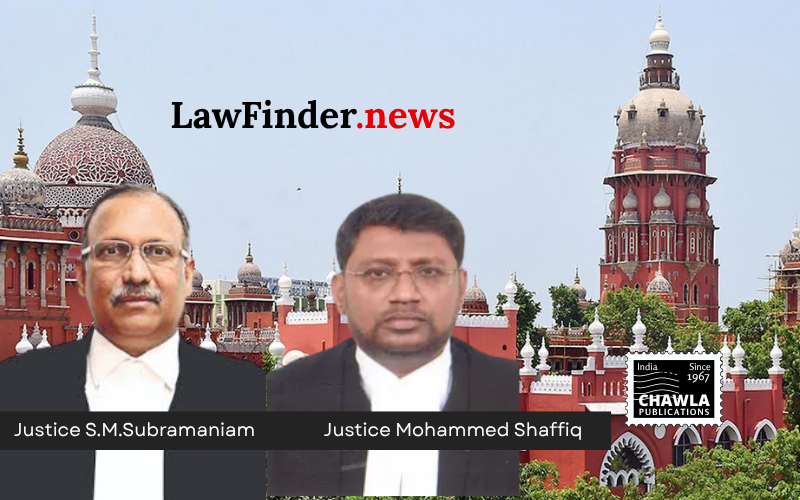
Inquiry Ordered into Allegations of Financial Irregularities and Mismanagement at Sri Prasanna Venkata Narasimma Perumal Temple
In a significant judgment, the Madras High Court has set aside a previous writ order concerning the registration of a contentious lease deed involving the Sri Prasanna Venkata Narasimma Perumal Temple, following allegations of maladministration and financial irregularities. The court has mandated a thorough inquiry to be conducted by the Hindu Religious and Charitable Endowments (HR&CE) Department.
The bench, comprising Justices S.M. Subramaniam and Mohammed Shaffiq, addressed the appeal filed by Dr. K.J. Renuka, who contested the writ order directing the Sub Registrar in Chennai to register a lease deed. Dr. Renuka argued that the lease, concerning temple properties, was improperly drafted, lacked clarity on the lease term, and involved a meagre rent not reflective of the market rates, potentially causing financial detriment to the temple.
The case highlighted that, even for denominational temples, the state is empowered to intervene in cases of maladministration under Article 26 of the Indian Constitution and the provisions of the Hindu Religious and Charitable Endowments Act. The court noted that the temple had been receiving public contributions, thus assuming the character of a public institution, which warranted state oversight.
The court directed the Commissioner of HR&CE to appoint an officer of the rank of Additional Commissioner to conduct a comprehensive inquiry into the allegations of mismanagement and financial discrepancies. The inquiry is to be completed within four months, during which no property transactions or leases should be executed by the temple administration.
This decision underscores the judiciary's role in ensuring transparency and accountability in the administration of religious institutions, safeguarding both religious rights and public interest.
Bottom Line:
Rights and administration of denominational temples under Article 26 of the Constitution of India - Allegations of mal-administration, financial irregularities, and other related issues must be addressed by the competent authority under the provisions of the Hindu Religious and Charitable Endowments Act.
Statutory provision(s): Article 26 of the Constitution of India, Hindu Religious and Charitable Endowments Act
Dr.K.J.Renuka v. Dr.K.Raghavendhar Karthik, (Madras)(DB) : Law Finder Doc Id # 2819508



