Court orders immediate approval for mother to donate kidney to son, emphasizes focus on documentary evidence over irrelevant considerations.
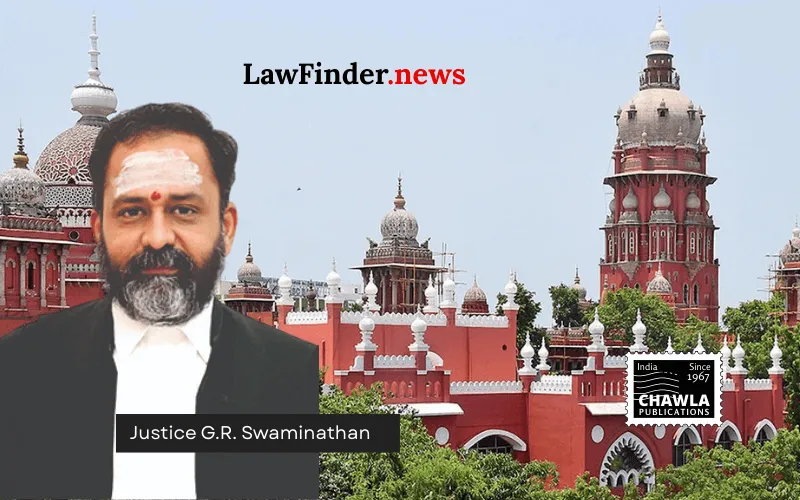
In a significant ruling, the Madras High Court has overturned a decision by an Authorization Committee that had denied a Bangladeshi mother's request to donate her kidney to her ailing son. Justice G. R. Swaminathan, presiding over the case, directed the committee to approve the transplant without delay, criticizing the committee's reliance on irrelevant considerations and highlighting the importance of evaluating documentary evidence.
The case involved Minor Atonu Saha, who has been diagnosed with end-stage renal chronic kidney disease, and his parents, who traveled to Chennai for medical treatment due to inadequate facilities in Bangladesh. Despite the second petitioner's compatibility as a donor, the Authorization Committee initially rejected their application, citing doubts about the marital relationship between the parents, rather than focusing on the mother-son relationship crucial to the donor-recipient dynamic.
Justice Swaminathan emphasized that the committee's role is to ascertain the donor-recipient relationship, guided by the Transplantation of Human Organs and Tissues Act, 1994, and its rules. The court highlighted that documentary evidence such as birth certificates, DNA reports, and apostilled documents should take precedence, aligning with international obligations under the Hague Apostille Convention.
The court noted that the applicants had provided comprehensive documentary evidence, including a DNA report and an e-Apostille certificate, verifying the mother-son relationship. Justice Swaminathan criticized the committee for considering irrelevant factors, stressing that the decision should be based on commonsensical evaluation of evidence, not fanciful doubts or irrelevant inquiries into the parents' marital status.
The judgment underscores the need for a dialogic approach in the evaluation process, where committees should engage with applicants to clarify discrepancies and prioritize documentary evidence, especially when language barriers exist. This ruling not only provides relief to the Saha family but also serves as a directive for committees to adhere strictly to statutory provisions and avoid unnecessary bureaucratic hurdles in life-saving situations.
Bottom line:-
Transplantation of Human Organs - Authorization Committee must focus on verifying near-relative relationships based on documentary evidence and avoid irrelevant considerations like spousal relationship when not directly relevant to the case.
Statutory provision(s):
Transplantation of Human Organs and Tissues Act, 1994 Sections 9(1A), 9(5), 9(6), Rule 20 of the 2014 Rules, Rule 17(2), Hague Apostille Convention, 1961.
Minor Atonu Saha v. State of Tamil Nadu, (Madras) : Law Finder Doc id # 2914184