Court reiterates adherence to Supreme Court's strict counselling schedule, dismisses plea for extended admission process
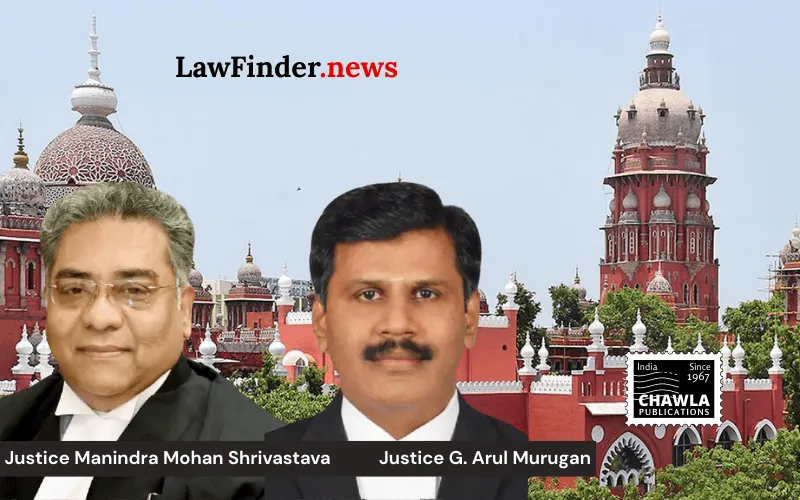
The Madras High Court, on February 3, 2026, overturned a prior decision by a Single Judge directing additional counselling rounds for NEET SS 2024-25, emphasizing that High Courts must adhere strictly to the Supreme Court-mandated admission schedules. The Division Bench comprising Chief Justice Manindra Mohan Shrivastava and Justice G. Arul Murugan underscored that extending admission deadlines would violate the Supreme Court's directives.
The case arose when Dr. Ajitha and others, who participated in the NEET-SS 2024, sought to fill unoccupied super-speciality seats through an additional mop-up counselling round. They contended that despite being eligible, administrative delays left many seats vacant, depriving them and others of fair opportunities.
Initially, the Single Judge sided with the petitioners, asserting that denying further counselling was arbitrary and hampered the efficient use of educational resources. However, the appellate court disagreed, referencing the Supreme Court's decision in Ashish Ranjan v. Union of India, which mandates strict adherence to the counselling schedule.
The court highlighted that the Supreme Court had consistently maintained that the last date for medical admissions, set at August 31 each year, is non-negotiable. Any deviation would open a "Pandora's box," undermining the purpose of fixed schedules, a principle echoed in several Supreme Court rulings.
The Division Bench dismissed the reliance on the Supreme Court's decision in Kevin Joy v. Government of India, which allowed a schedule extension under exceptional circumstances, explicitly noting that it should not serve as a precedent.
Furthermore, the court clarified that while the High Court holds wide powers under Article 226 of the Constitution, they do not extend to modifying Supreme Court-approved schedules. The court advised petitioners to seek remedies directly from the Supreme Court if they believed an injustice had occurred.
The judgment underscores the judiciary's commitment to maintaining structured timelines in medical education, ensuring fairness and preventing arbitrary exceptions that could disrupt the established order.
Bottom Line:
Strict adherence to the schedule for counselling and admission for postgraduate medical courses is mandated, and High Courts cannot extend the last date of admission in violation of the Supreme Court's directions.
Statutory provision(s): Postgraduate Medical Education (Amendment) Regulations, 2015, Article 226 of the Constitution of India, Ashish Ranjan v. Union of India (2016) 11 SCC 225, Kevin Joy v. Government of India W.P.(Civil) No.106 of 2023