Court Affirms Censor Board's Clearance; Asserts No Grounds for Criminal Contempt in Fictional Depictions
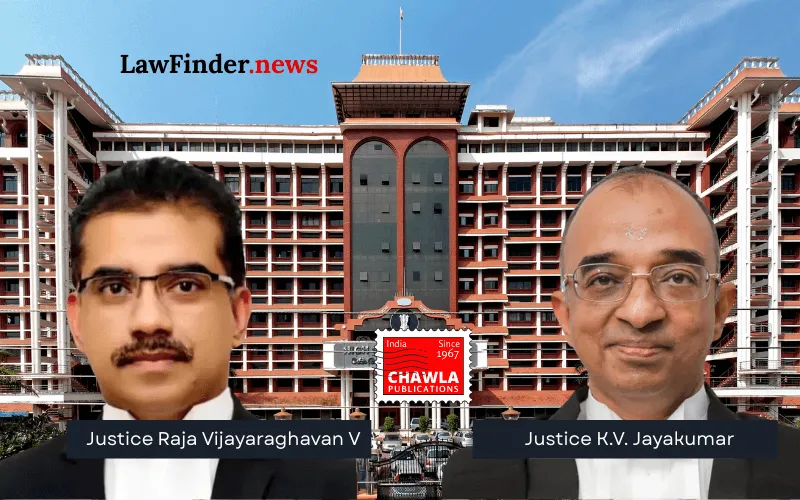
In a significant ruling, the Madras High Court has dismissed a writ petition seeking the ban of the film 'Karuppu', upholding the principles of artistic freedom enshrined in Article 19(1)(a) of the Constitution. The petition, filed by R.S. Tamilvendan, alleged that the film scandalized the judiciary by portraying a fictional corrupt judge and lawyer. However, the court, comprising Justices G.R. Swaminathan and V. Lakshminarayanan, found no merit in the claims, asserting that creative liberties in films are protected unless they clearly violate legal standards.
The judgment reinforced that the portrayal of fictional characters does not attract Section 2(c) of the Contempt of Courts Act, 1971, which applies to actual courts. The court emphasized the importance of safeguarding artistic expression, stating that creative exaggeration and depiction in films should not be curtailed unless they transgress reasonable restrictions under Article 19(2).
The judges noted that the Censor Board had already cleared the film for public exhibition, and the court should not substitute its judgment unless compelling reasons are shown. The court observed that the theme of 'Karuppu', depicting the alliance between an unethical lawyer and a corrupt judge, is exaggerated but falls within the domain of artistic license.
The ruling also highlighted the broader context of freedom of speech and expression, reiterating that films, as a form of art, are entitled to a wide latitude of creative freedom. The judgment drew parallels with previous Supreme Court decisions, including 'Prakash Jha Productions v. Union of India', underscoring that once a film is certified by the Censor Board, the onus is on the state to maintain public order rather than banning the film.
In conclusion, the court dismissed the plea, stating that the petitioner failed to establish any legal grounds to override the film's certification or to demonstrate that the movie constituted criminal contempt. The judgment is a testament to the judiciary's commitment to protecting artistic freedoms while ensuring that legal boundaries are respected.
Bottom Line:
Freedom of speech and expression - Artistic freedom and creative expression are integral to the right under Article 19(1)(a) of the Constitution of India - Courts should not intervene to ban films cleared by the Censor Board unless it is shown that reasonable restrictions under Article 19(2) are violated.
Statutory provision(s): Article 19(1)(a) of the Constitution of India, Article 19(2) of the Constitution of India, Contempt of Courts Act, 1971 Section 2(c), Cinematograph Act, 1952 Section 5B
R.S.Tamilvendan v. Secretary to the State of Tamil Nadu, (Madras)(DB) : Law Finder Doc id # 2907594