Court Supports Authorities' Decision Against Erecting Statue Due to Caste Concerns, Emphasizes Constitutional Mandate for Casteless Society
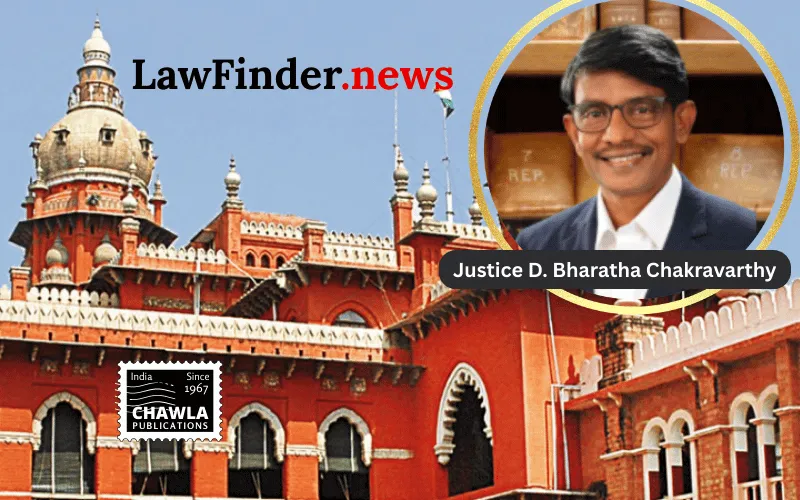
In a significant ruling, the Madras High Court, Madurai Bench, has upheld the decision of the authorities to deny permission for the erection of a statue of the renowned freedom fighter Veerapandiya Kattabomman on private land. The judgment, delivered by Justice D. Bharatha Chakravarthy, emphasized the constitutional mandate to foster a casteless and egalitarian society, which played a pivotal role in the court's decision.
The petitioner, S. Kumarasamy, sought permission to erect a bronze statue of Veerapandiya Kattabomman on his private land in Uadikulam village, citing the freedom fighter’s historical significance and heroic status. Despite the cultural importance, the authorities refused permission due to concerns over potential caste-based consolidation and societal disturbances that such an installation might incite.
Justice Chakravarthy observed that the authorities were compelled to reject the petitioner's request due to the prevailing caste dynamics, which overshadow the true legacy of freedom fighters. He highlighted the painful reality that casteism continues to influence the erection of statues and memorials of historical figures, leading to annual security challenges in the region.
The court underscored that the existence of a Government Memorial in Panchalangurichi, Thoothukudi District, dedicated to Veerapandiya Kattabomman, provides an appropriate venue for individuals to pay their respects. Justice Chakravarthy reiterated the importance of utilizing the existing memorial rather than erecting additional statues that could exacerbate caste tensions.
The judgment reinforces the constitutional commitment to eliminate caste-based divisions and promote unity, urging society to focus on the true valor and contributions of freedom fighters rather than caste affiliations. The court's decision aligns with the broader goal of achieving a harmonious society free from caste prejudices.
In conclusion, the writ petition was disposed of with no additional costs, and the connected miscellaneous petition was closed. This ruling serves as a reminder of the ongoing challenges in balancing cultural heritage with constitutional ideals, encouraging reflection on the societal values that should guide such endeavors.
Bottom Line:
Permission to erect a statue of a freedom fighter on private land - Authorities refused permission due to concerns over caste-based consolidation and societal implications - Emphasis placed on constitutional mandate to create a casteless egalitarian society.
Statutory provision(s): None explicitly mentioned in the judgment.