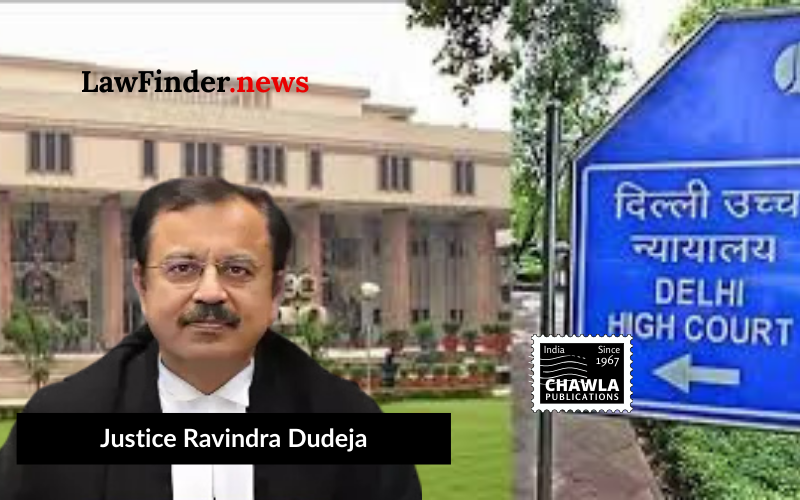
Delhi High Court Denies Discharge Plea in Defamation Case Against TV Today Network. Court rules that Magistrates lack power to discharge accused in summons trial cases, emphasizes trial procedure must follow through to conclusion.
In a significant ruling, the Delhi High Court on November 4, 2025, dismissed petitions filed by TV Today Network Ltd. and its officials seeking discharge in a defamation case initiated by Ramesh Bidhuri and Rajpal Poswal. The judgment, delivered by Justice Ravinder Dudeja, underscores the procedural limitations of Magistrates in summons trial cases under the Code of Criminal Procedure, 1973.
The case originated from a broadcast aired on TV Today Network's channel in August 2011, which reported on a gang rape and abduction case involving an individual purported to be linked to Ramesh Bidhuri, a then-Member of the Legislative Assembly. The respondents alleged the telecast falsely implicated them, thereby defaming their reputations.
The petitioners sought quashing of the trial court's order from December 2018, which dismissed their applications for discharge, arguing that the broadcast was based on public records and made in public interest. However, Justice Dudeja upheld the trial court's decision, asserting that the concept of discharge does not apply to summons cases, and once cognizance is taken, the Magistrate is bound to proceed with the trial.
Citing precedents from the Supreme Court, including Subramanium Sethuraman v. State of Maharashtra and Adalat Prasad v. Rooplal Jindal, Justice Dudeja emphasized that the criminal courts do not possess inherent powers to recall or review summoning orders in summons trials. The judgment reiterates that the power to discharge is exclusive to warrant cases.
The court further noted that the petitioners had not challenged the original summoning order issued in 2014, which limits their scope for relief in the current petitions. The decision reinforces the procedural integrity of summons trials and the need for accused parties to face trial once summons have been issued.
Bottom Line:
In summons trial cases, Magistrates do not have the power to discharge an accused once cognizance has been taken and summons issued. The concept of discharge is alien to summons trials under the Code of Criminal Procedure.
Statutory provision(s): Code of Criminal Procedure, 1973 - Sections 482, 204, 239, 245, 258; Indian Penal Code, 1860 - Sections 499, 500
TV Today Network Ltd. v. Ramesh Bidhuri, (Delhi) : Law Finder Doc Id # 2804324