Court Upholds Rs. 19.48 Lakhs Award for Balance Construction Costs but Rules that Liquidated Damages Must Be Supported by Legal Injury and Evidence; Arbitration Appeal by MWC Market Services Pvt. Ltd. Allowed in Part
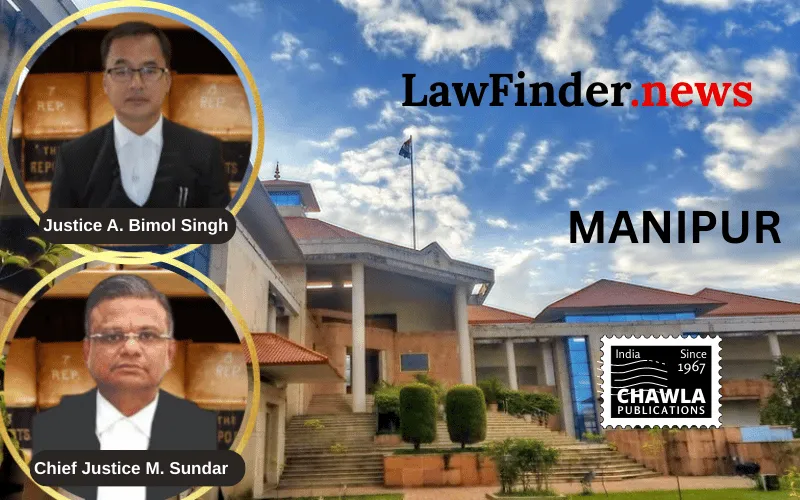
In a landmark decision dated May 30, 2026, the Manipur High Court (Division Bench) delivered a nuanced judgment in Arbitration Appeal No. 1 of 2022, involving MWC Market Services Pvt. Ltd. and the State of Manipur. The Court scrutinized an arbitral award that had imposed Rs. 10 crores as liquidated damages on MWC for failing to commence the first draw of the Manipur State Online Lottery within the stipulated contractual period.
The contractual framework, based on a contract dated April 5, 2001, and its subsequent modification on November 20, 2002, mandated that the first lottery draw be held within six months of the modification date. MWC failed to comply, conducting the first draw only on December 1, 2003, beyond the original deadline of May 20, 2003. The State, invoking a liquidated damages clause (Clause 10.4 of the contract’s indemnity section), claimed Rs. 35 crores as compensation. The Arbitral Tribunal (AT), however, awarded Rs. 10 crores, and an additional Rs. 19,48,111 for the balance construction costs of an infrastructure facility made by the State for lottery operations, totaling Rs. 10.19 crores.
MWC challenged the arbitral award under Section 34 of the Arbitration and Conciliation Act, 1996, contending that the liquidated damages award was arbitrary and lacked evidentiary support, thereby violating the fundamental policy of Indian contract law and public policy. The Section 34 Court had dismissed MWC’s petition and confirmed the award. MWC subsequently appealed under Section 37 of the Act.
The High Court’s Division Bench carefully dissected the legal issues focusing on two key points:
1. Liquidated Damages and Proof of Legal Injury:
The Court underscored that even under a liquidated damages clause governed by Section 74 of the Indian Contract Act, 1872, some proof of legal injury or damage must be established. It rejected the arbitral finding awarding Rs. 10 crores without any evidence or reasoning justifying the quantum, emphasizing the binding precedents of the Supreme Court in Fateh Chand v. Balkishan Dass (1963), Maula Bux v. Union of India (1969), and Kailash Nath Associates v. Delhi Development Authority (2015). These authorities clarify that while actual proof of loss may be dispensed with in genuine pre-estimates, legal injury must still be demonstrated. The arbitrary award without evidence, the Court held, is patently illegal and in conflict with the public policy of India.
2. Severability of Arbitral Awards:
Applying the principle of severability under Section 34(2)(a)(iv) of the Arbitration and Conciliation Act, the Court severed the liquidated damages claim from the counter-claim for the balance cost of construction. While the Rs. 10 crores award was set aside, the Rs. 19,48,111 claim for actual construction costs — supported by evidence and not in the nature of damages — was upheld.
The Court also referred to the Oil & Natural Gas Corporation Ltd. v. Saw Pipes Ltd. (2003) judgment to affirm that patent illegality appearing on the face of the award can be grounds for setting aside awards under the pre-2015 regime applicable here. It found the arbitral tribunal’s failure to consider legal injury and lack of evidence as a fundamental error.
The judgment further elaborated on the nature of the contractual arrangement, recognizing it as a concession agreement rather than a trade contract, citing precedents that the sale of lottery tickets is not a fundamental right or free trade. The State granted the concession by private negotiation without public tender, placing reliance on MWC’s capability, which ultimately was not fulfilled.
The High Court accordingly allowed the appeal in part, setting aside the Rs. 10 crores liquidated damages award but sustaining the Rs. 19,48,111 award for balance construction costs. The Section 34 Court order was modified accordingly.
This judgment reaffirms the vital legal principle that liquidated damages, even when stipulated in contracts, must have a rational and evidentiary basis. Arbitrary or unsupported awards violate public policy and the fundamental principles of Indian contract law. The ruling provides critical guidance for arbitration proceedings, emphasizing judicial scrutiny of damages awards to ensure fairness and legality.
Bottom line:-
Arbitration - Award of liquidated damages must be supported by evidence and proof of legal injury even under a liquidated damages clause. Arbitrary awards without evidence contravene public policy and are patently illegal.
Statutory provision(s):
Arbitration and Conciliation Act, 1996 Section 34(2)(b)(ii), Section 34(2)(a)(iv), Section 37; Indian Contract Act, 1872 Section 74
MWC Market Services Pvt. Ltd. v. State of Manipur, (Manipur)(DB) : Law Finder Doc id # 2911783