Court Rules Non-Signatory Status of Suraksha Salvia LLP Invalidates Section 9 Arbitration Application Against State
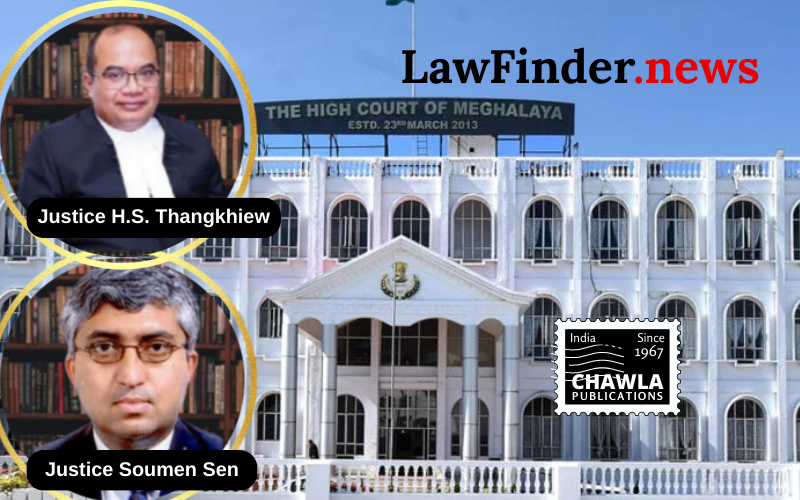
In a significant judgment, the Meghalaya High Court has dismissed the appeal filed by Suraksha Salvia LLP against the State of Meghalaya, highlighting the necessity of being a signatory to an arbitration agreement to maintain an application under Section 9 of the Arbitration and Conciliation Act, 1996. The bench, comprising Chief Justice Soumen Sen and Justice H.S. Thangkhiew, upheld the lower court's decision, emphasizing that the appellant, Suraksha Salvia LLP, was not a party to the Memorandum of Understanding (MOU) with the Department of Health and Family Welfare, Government of Meghalaya.
The case originated from a dispute over a public-private partnership (PPP) for establishing a diagnostic centre in Shillong. The original MOU was signed in June 2019 between the government and Suraksha Speciality LLP along with Salvia Global LLP. However, Suraksha Salvia LLP, which was incorporated later in July 2019, argued that it was the true partner in the agreement due to its formation by the two entities mentioned in the MOU.
The court clarified that for an application under Section 9 of the Arbitration Act to be maintainable, the applicant must be a party to the arbitration agreement. The court found that Suraksha Salvia LLP was not in existence at the time the MOU was signed and thus could not be considered a party to the arbitration agreement. Additionally, the court rejected the application of the "group of companies" doctrine as the LLP was not existent at the time of the agreement.
The judgment further noted that the appellant's claim of misnomer or mis-description was insufficient to establish legal rights under the MOU. The court also addressed the legislative intent of the Specific Relief Act, 1963, which restricts injunctions that could delay infrastructure projects, underscoring the importance of not impeding public development goals.
Ultimately, the court's decision underscores the critical nature of being a signatory to an arbitration agreement and the limitations on non-signatories in seeking arbitration relief, particularly in the context of infrastructure development.
Bottom Line:
Arbitration Agreement - Maintainability of application under Section 9 of the Arbitration and Conciliation Act, 1996 - A party not being a signatory to the arbitration agreement cannot maintain an application under Section 9 of the Act.
Statutory provision(s): Arbitration and Conciliation Act, 1996 Sections 7, 9; Specific Relief Act, 1963 Section 20A, Section 41(ha); Limited Liability Partnership Act, 2008 Sections 60, 61, 62.
Suraksha Salvia LLP v. State of Meghalaya, (Meghalaya)(DB) : Law Finder Doc Id # 2820136