Supreme Court Upholds Removal of Gramin Dak Sevak for Embezzlement. Judicial review limits overstepped by High Court, Supreme Court reinstates disciplinary action
In a significant ruling, the Supreme Court of India has overturned a decision by the Rajasthan High Court, reinstating the removal of a Branch Postmaster for embezzlement of public funds. The case, Union of India v. Indraj, involved the misappropriation of funds by a Gramin Dak Sevak, Indraj, who was found guilty of stamping account holder passbooks without entering the corresponding transactions in the post office records, thereby using the funds for personal expenses.
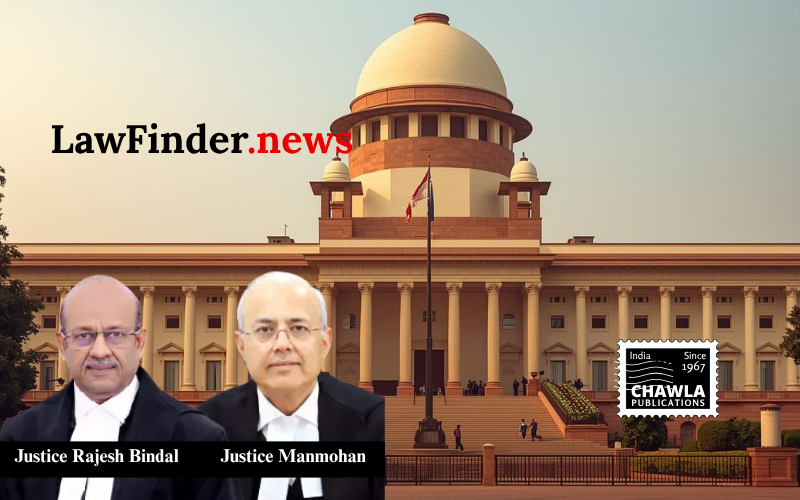
The Supreme Court bench, comprising Justices Rajesh Bindal and Manmohan, held that the High Court had overreached its jurisdiction by delving into the merits of the disciplinary proceedings, which were conducted following due process. The appeal, Civil Appeal No. 13183 of 2025, arose from a SLP challenging the High Court's decision to set aside the removal penalty imposed on Indraj by the Central Administrative Tribunal.
The disciplinary actions stemmed from findings during an annual inspection on June 16, 2011, which revealed discrepancies in the accounts managed by Indraj. Despite the embezzled amount being voluntarily returned later, the Supreme Court emphasized that such restitution does not absolve the misconduct, especially when the relationship between a banker and a customer is fundamentally based on trust.
Indraj had been removed from service on December 8, 2014, after an inquiry confirmed the charges against him. However, he challenged this decision through a series of appeals, ultimately leading to the High Court's intervention. The High Court's ruling was based on perceived suspicion rather than concrete evidence, which the Supreme Court deemed inappropriate given the clear evidence of embezzlement.
The Supreme Court underscored that judicial review should focus on the procedural integrity of the disciplinary process rather than reassessing the merits of the case. It noted that Indraj was given ample opportunity to present his defense, cross-examine witnesses, and was even provided with defense assistance during the inquiry. His admission of guilt and subsequent repayment of the embezzled funds were significant factors considered by the Tribunal and the Supreme Court.
The Supreme Court's decision reinforces the principle that the mere return of embezzled funds does not negate the misconduct. It highlights the importance of maintaining integrity in roles involving public trust, such as those in banking and postal services. The ruling also clarifies the limits of judicial review, cautioning courts against extending their jurisdiction into the merits of disciplinary actions where due process has been observed.
This judgment serves as a reminder of the stringent standards expected in public service roles and the judiciary's role in upholding disciplinary actions that are grounded in procedural fairness and supported by evidence.
Bottom Line:
High Court cannot extend the scope of its jurisdiction to examine merits of disciplinary proceedings when due process has been followed and charges of embezzlement are proven.
Statutory provision(s): Gramin Dak Sevak (Conduct and Engagement) Rules, 2011 - Rules 21 and 131
Union of India v. Indraj, (SC) : Law Finder Doc id # 2807661