Supreme Court Alters Conviction from Murder to Culpable Homicide in Shrikrishna Case Supreme Court reduces sentence considering age and circumstances of the appellant, highlighting individual role in group clash.
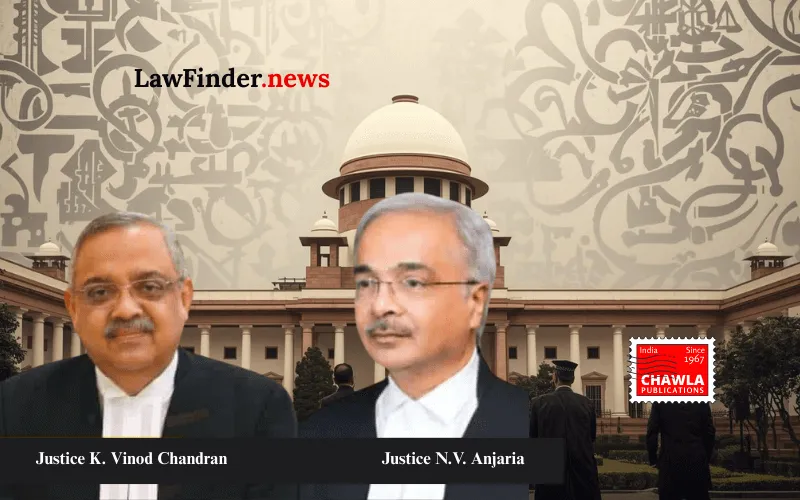
In a significant ruling, the Supreme Court of India has altered the conviction of Shrikrishna, the appellant in the criminal appeal case, from murder under Section 302 of the Indian Penal Code (IPC) to culpable homicide not amounting to murder under Section 304 Part II. The judgment, delivered by a bench comprising Justices K. Vinod Chandran and N.V. Anjaria, took into account the individual role of the appellant, the absence of common intention, and the circumstances surrounding a group clash that led to the tragic incident.
The case originated from a group altercation that took place in Village Dudankhedi on December 10, 1992. The altercation, which spiraled into violence, resulted in the death of Ram Singh due to injuries inflicted by Shrikrishna with a lathi. Initially convicted under Section 302 IPC by the Additional Sessions Judge in Basoda, the appellant was sentenced to life imprisonment. However, the High Court later reclassified the conviction under Section 304 Part II IPC, imposing a sentence of seven years rigorous imprisonment.
The Supreme Court, in its analysis, noted the absence of a common criminal intention among the accused and the spontaneous nature of the clash. The evidence, including medical reports, indicated that Ram Singh's death resulted from a single blow to the head with a blunt object. The appellant, Shrikrishna, also sustained injuries during the fray, suggesting a scenario of mutual aggression rather than premeditated murder. The bench emphasized that in cases of sudden confrontation, the specific actions and intentions of individuals must be critically assessed.
While upholding the conviction under Section 304 Part II, the Supreme Court considered Shrikrishna’s advanced age and the time already served in incarceration. With the appellant being over 80 years old and having spent more than six years in prison, the Court deemed it harsh to impose further imprisonment. Consequently, the sentence was reduced to the period already undergone, emphasizing the need for sensitivity in sentencing, especially given the appellant's circumstances.
This judgment underscores the judiciary's nuanced approach to cases involving complex group dynamics and the importance of tailoring sentences to fit individual roles and circumstances. The decision also reflects the Court's commitment to ensuring justice is both served and tempered with humanity.
Bottom Line:
The conviction of the appellant altered from murder under Section 302 IPC to culpable homicide not amounting to murder under Section 304 Part II IPC, considering individual role, absence of common intention, and circumstances of group clash.
Statutory provision(s): Indian Penal Code, 1860 Sections 302, 304 Part II, 149, 147, 148
Shrikrishna v. State of Madhya Pradesh, (SC) : Law Finder Doc Id # 2835291