Supreme Court Mandates Strengthened Framework for RTE Act Implementation Ensures 25% Reservation for Disadvantaged Sections in Schools, Addresses Digital Barriers and Calls for Comprehensive Regulations
In a landmark judgment, the Supreme Court of India has directed the formulation of enforceable rules to ensure the effective implementation of Section 12 of the Right to Education Act, 2009. The Act mandates neighbourhood schools to reserve 25% of seats for children from weaker and disadvantaged sections of society. This decision aims to address systemic challenges and ensure inclusivity and equality in education.
The case, Dinesh Biwaji Ashtikar v. State of Maharashtra, highlighted the plight of a petitioner who, despite meeting criteria for free education under the RTE Act, faced denial due to procedural hurdles. The Supreme Court, acknowledging the transformative potential of Section 12, emphasized the need for a national mission to ensure its implementation.
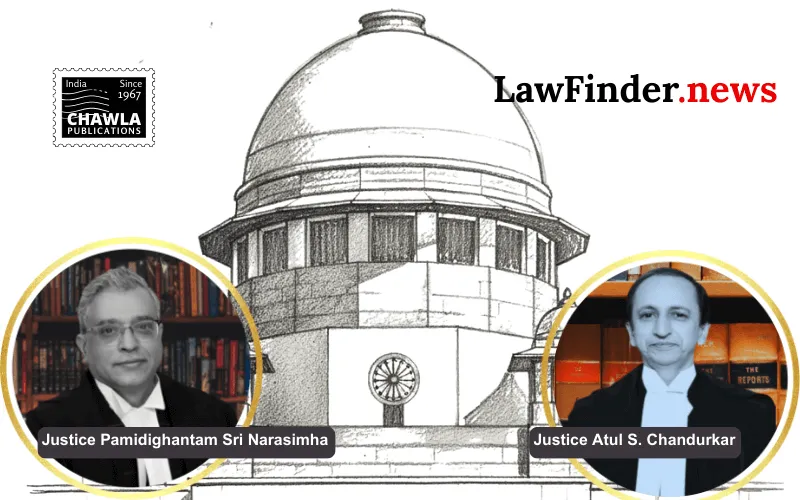
Justice Pamidighantam Sri Narasimha and Justice Atul S. Chandurkar, while delivering the judgment, underscored the constitutional obligation of the State under Article 21A to provide free and compulsory education to children aged 6-14 years. The Court noted that effective implementation of the RTE Act can significantly alter social structures by embedding principles of equality and fraternity.
The judgment identified several barriers to implementation, including digital illiteracy, lack of help-desks, language barriers, and inadequate transparency in the admission process. The Court provided a comprehensive set of directives to overcome these challenges, including establishing help-desks, ensuring information is available in multiple languages, and creating a redressal mechanism for grievances.
Furthermore, the Supreme Court directed the issuance of enforceable rules and regulations under Section 38 of the RTE Act, which will be monitored by the National Commission for Protection of Child Rights (NCPCR) and State Commissions. The NCPCR has been tasked with filing an affidavit by March 31, 2026, detailing compliance across states.
This decision reaffirms the Court's commitment to ensuring that the right to education is not a mere statutory declaration but a practical reality for all children, particularly those from marginalized backgrounds. By addressing procedural inefficiencies and establishing a robust regulatory framework, the Supreme Court aims to pave the way for a more inclusive educational system.
Bottom Line:
Neighbourhood schools are obligated to admit children from weaker and disadvantaged sections to the extent of 25% of class strength - Effective implementation of this mandate can transform societal structures, ensuring equality and inclusivity.
Statutory provision(s): Right to Education Act, 2009 - Section 12, Constitution of India - Article 21A, Article 51A(k), Sections 6, 7, 8, 9, 10, 31, 38 of the Right to Education Act
Dinesh Biwaji Ashtikar v. State of Maharashtra, (SC) : Law Finder Doc Id # 2837383